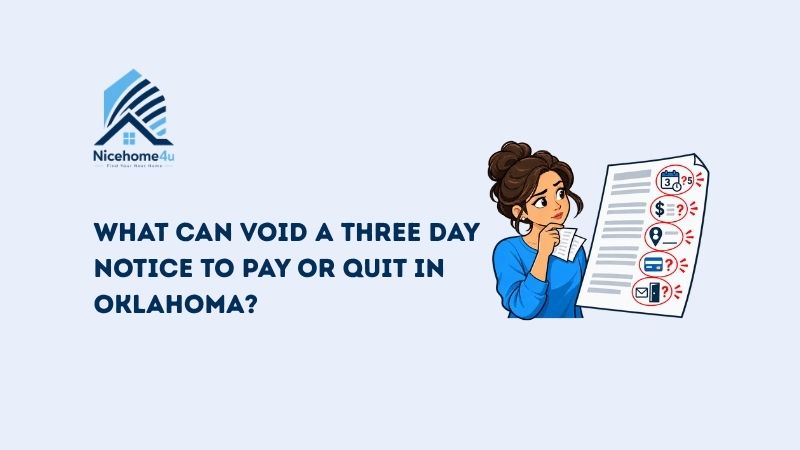
If you’re renting in Oklahoma and rent is late, you might find a notice taped to your door warning you to pay up or move out. A lot of tenants search for “three day notice to pay or quit,” but here’s something worth knowing right away.
Oklahoma doesn’t actually use a three-day notice for unpaid rent. State law gives you five days, not three. If the notice gives you only three days to pay before the landlord files an eviction case, it may not satisfy Oklahoma’s five-day requirement and can be challenged in court.
This guide covers what can void a three-day notice to pay or quit in Oklahoma, what a valid Oklahoma eviction notice has to include, and what your rights are if the notice you received doesn’t follow the rules.
What Is a Three-Day Notice to Pay or Quit?
A notice to pay rent or quit is a written notice from your landlord. It says you owe rent, gives you a set number of days to pay it, and warns that you’ll have to move out if you don’t. This notice period is the first required step in the eviction process. If you are unsure when rent becomes overdue or when late fees can begin, review when rent is due and what happens if you pay late in Oklahoma.
Under Oklahoma law, a landlord may terminate a rental agreement for nonpayment if the tenant does not pay the rent within five days after written notice of the landlord’s demand for payment.
Types of Eviction Notices in Oklahoma
Not every eviction notice is about unpaid rent, and it helps to know the difference:
5-day notice to pay or quit. Used when a tenant fails to pay rent on time.
15-day notice for lease violations. Used when a tenant violates the lease agreement in some other way, like breaking specific lease terms about pets, guests, or property damage. This one works a little differently: the tenant has 10 days to fix the problem, and the rental agreement ends on day 15 if it isn’t fixed.
30-day notice to end a month-to-month rental agreement. Either side can end an ongoing lease or rental agreement this way without giving a reason, as long as it isn’t done for a discriminatory reason.
Immediate termination for serious conduct. Oklahoma law may allow a landlord to terminate the rental agreement and file an eviction case immediately for certain criminal activity or conduct that threatens imminent and irremediable harm to the property or another person.
Unlike a lease violation, unpaid rent has its own five-day notice, and the rest of this guide focuses on that specific three-day notice question tenants ask about most: the pay-or-quit notice for overdue rent.
Problems That May Make An Oklahoma Rent Notice Defective
Whether it is called a three-day notice or a five-day notice, the notice must follow Oklahoma’s legal requirements. Problems with the deadline, amount demanded, or delivery method may give a tenant a reason to challenge the notice or eviction case.
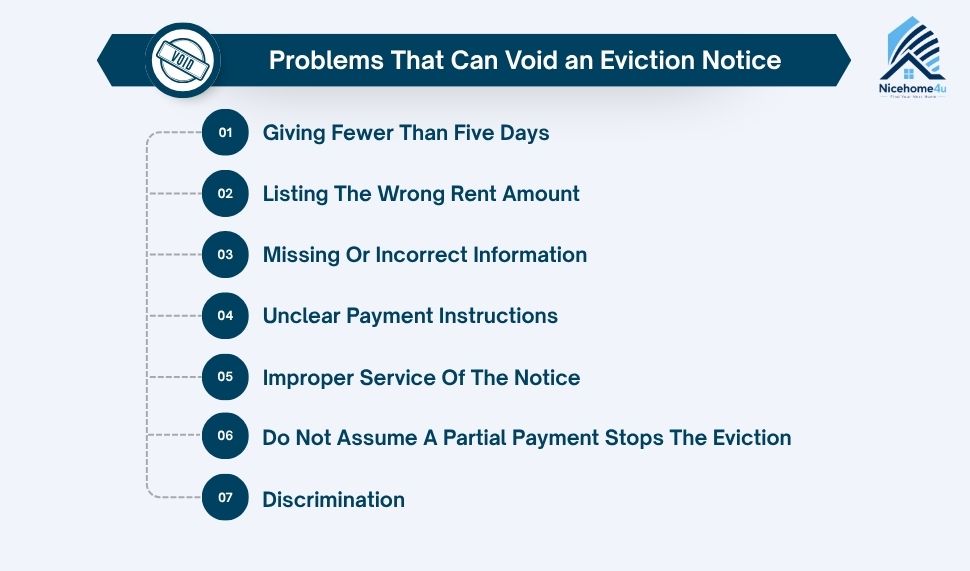
1. Giving Fewer Than Five Days.
This is the big one in Oklahoma. If a notice to pay rent or quit gives a tenant only three days, or any number less than five, it falls short of what Oklahoma law requires. The notice period is counted starting the day after you receive it, and you’re owed the full five days, sometimes called a cure period, since it’s your chance to fix the missed payment before your landlord can file an eviction lawsuit. (Some serious situations allow immediate termination instead, but that’s not what a standard pay-or-quit notice is for.)
2. Listing The Wrong Rent Amount.
A pay-or-quit notice can only demand rent that is strictly due, nothing else. Oklahoma law treats late fees as a separate kind of charge, not as rent, so a notice that folds in late fees, utility bills, or other charges along with the rent owed is demanding more than the law allows. If the amount on your notice doesn’t match what you actually owe in rent, that’s grounds to challenge it.
3. Missing Or Incorrect Information.
A valid eviction notice has to correctly name the tenant, list the right rental unit or property address, and clearly state what’s owed under the lease agreement. Wrong names, a missing apartment number, or a vague description of the problem all count as incomplete notices, and courts routinely find them defective.
4. Unclear Payment Instructions.
The notice should say exactly how and where to pay, not just “pay your rent,” but a real address, accepted payment methods, and someone to contact with questions. Unclear payment instructions can leave a tenant with no real way to comply, and that can invalidate the notice.
5. Improper Service Of The Notice.
How a notice is delivered matters as much as what it says. In Oklahoma, a landlord (or a professional process server they hire) is supposed to try handing the notice to the tenant directly first. If that’s not possible, it can be handed to another adult resident of the property. As a last resort, it can be posted on the door and also mailed by certified mail. If a landlord serves the notice in a way state law doesn’t allow, that’s improper service, and improper service can void a five-day notice entirely.
6. Do Not Assume A Partial Payment Stops The Eviction.
If a landlord takes a partial rent payment after already serving a notice to pay rent or quit, that can complicate the eviction process. Accepting money toward the debt without a clear, written agreement about what happens next can be treated as waiving the original demand, meaning the landlord may need to serve a new notice before moving forward.
7. Discrimination.
A landlord cannot evict a tenant, or make eviction-related decisions, based on race, color, religion, sex, disability, familial status, or national origin. An eviction motivated by illegal discrimination may violate the federal Fair Housing Act and can be challenged, even when the landlord followed the normal notice procedure.
A quick, honest note on retaliation: many states have a specific law stopping landlords from evicting a tenant simply for complaining about repairs or code violations. Oklahoma is a little different; it doesn’t currently have a standalone law like that. That doesn’t mean landlords can do whatever they want, but tenants here have less of a built-in legal shield on this specific issue than in some other states. If you believe a notice was served because you complained about something, it’s worth talking to a legal aid organization or attorney about your options.
How Should a Five Day Notice Be Delivered?
How the notice reaches you matters too, not just what it says. Oklahoma generally expects one of these to happen, usually tried in this order:
Personal delivery. The landlord tries handing the notice directly to you first.
Substituted service. If you’re not around, it can be handed to another adult who lives at the property.
Posting and mailing. As a last resort, it’s posted somewhere visible, like the front door, with a copy also sent by mail.
If none of this happened the way it’s supposed to- say, nobody ever tried handing it to you, and it just showed up unusually- that’s worth mentioning if you ever need to question the notice.
What an Invalid Notice Means for You
Finding an error doesn’t erase rent that’s actually owed. But it does matter a great deal for the eviction process itself, and it affects both the landlord and the tenant. If a judge finds that the landlord did not meet Oklahoma’s notice requirements, the court may dismiss the current eviction case or deny the landlord’s request for possession. The landlord may correct the problem, serve a new notice, and file another case. A defective notice does not erase rent that the tenant legally owes.
In practice, that means:
- The eviction process resets, and the notice period starts fresh.
- You get more time in the rental unit while a new notice is prepared and served.
- You get a real chance to pay the rent owed, or work out a plan, before a new notice period runs out.
A defective notice may delay the current eviction case, but it does not cancel unpaid rent or permanently prevent the landlord from starting the process again. The underlying unpaid rent is still a real debt unless you and your landlord work something out. It’s still worth trying to pay overdue rent as soon as you can, even during a dispute over the notice, since that removes the underlying risk no matter how the notice issue plays out. But when money is tight, extra time can make a real difference. If paying the balance is not possible, review what to do when financial hardship affects your lease before moving out early or stopping rent payments.
What Happens After The Notice: Step By Step
If the five-day notice period runs out and rent still isn’t paid, here’s what typically happens next in Oklahoma:
1. Eviction Lawsuit Filed.
Your landlord can file what’s legally called a Forcible Entry and Detainer action with the court clerk in the county where you live; this is Oklahoma’s version of what’s called an “unlawful detainer lawsuit” in some other states, along with a filing fee.
2. Court Summons.
You’ll be given official notice of when and where the court hearing will happen. This step matters: if you get a summons and don’t show up, the court can enter a default judgment against you, meaning you lose automatically without a chance to tell your side.
3. Court Hearing.
The judge hears both sides. Your landlord may ask the court for possession of the unit, a money judgment for unpaid rent and costs, or both. This is your chance to present evidence, including any problems with the notice itself.
4. After The Ruling.
If the judge rules for the landlord, you’ll be given a move-out deadline, sometimes as little as 48 hours. If the tenant remains in the unit past that deadline, the landlord can ask the court for a writ of execution, and law enforcement can post one more 48-hour notice before removing you and your belongings. If a landlord fails to follow any of these court-ordered steps correctly, that’s also something a tenant or their attorney can raise.
Your Rights As A Tenant
Whatever stage this process is at, a few protections hold under Oklahoma law. You can find a broader explanation of tenant rights and responsibilities in Oklahoma, including rent, repairs, privacy, notices, and illegal lockouts.
- Only a judge can order you out. Your landlord cannot change the locks, shut off your utilities, or physically remove you without a court order, even if you haven’t paid rent. If that happens to you, contact an attorney right away.
- Paying in full cures a five-day notice. If you pay everything owed within the five days, the notice is satisfied, and the eviction process stops.
- You get your day in court. You can show up to the hearing, explain your side, and point out problems with the notice or the way it was served.
How To Check Your Notice For Errors
If you’ve been served an Oklahoma eviction notice, it’s worth checking it against this list before assuming an eviction is a sure thing:
- Does it give you at least five full days, not three?
- Does the rent amount match your lease or rental agreement, with no late fees or extra charges folded in?
- Are your name and the property address written correctly?
- Does it clearly explain how and where to pay?
- Can you tell exactly how and when it was delivered to you?
- Did your landlord accept a partial payment after serving it, with no new written agreement?
Any “no” on this list is worth raising, either with your landlord directly or with a local legal aid organization.
What Happens If You Win In Court?
Winning in court over a defective notice usually means the current eviction lawsuit gets dismissed, not that the rent is forgiven. The landlord may need to correct the problem, serve a new notice, and file another case. A dismissal does not erase unpaid rent and does not necessarily remove the original court filing from public records. It’s a real result, but it’s best treated as breathing room to pay what’s owed, work out a plan, or figure out your next move, not as the end of the issue.
Where To Research Oklahoma Eviction Rules And Get Help
Laws change, and every situation is different, so double-check anything here before relying on it. For official court forms and case records, the Oklahoma State Courts Network (oscn.net) is the state’s own resource. If a court summons has already arrived, talk to a lawyer as soon as you can, rather than waiting until the hearing date.
How We Work With Tenants Around Late Rent And Notices
We try to prevent rushed or unclear notices from ever happening. Our approach is simple:
Early communication. We send reminder messages before and just after the rent due date. If something comes up, we encourage tenants to contact us before the unpaid rent leads to a formal notice.
Clear notices when needed. When a notice is required, we use simple, clear language, accurate rent numbers, and proper service so tenants understand the cure period and how to fix the problem. Incomplete notices and incorrect rent figures are not how we operate.
Clean, move-in ready homes. We manage 530+ residents across Oklahoma City in single-family homes, and we work with some Housing Choice (Section 8) voucher programs by coordinating with OHFA and local housing authorities.
Open door for questions. If you have questions about rent, notices, or our rental criteria, reach out through the Nicehome4u contact form. Problems can often be solved before they turn into legal proceedings or an eviction lawsuit.
Conclusion
Oklahoma generally requires a five-day written demand for unpaid rent, not a three-day deadline. Check the date, the amount demanded, and how it was delivered, but don’t assume that every mistake automatically cancels the notice. Keep communicating in writing, save copies of the notice and your payment records, and seek legal help right away if an eviction case has already been filed.
This article is for general information and isn’t legal advice. If you’re facing an eviction, contact Legal Aid Services of Oklahoma or a local attorney for guidance specific to your situation.