Losing your job or facing a sudden financial setback can leave you wondering how you will keep paying rent. Breaking a lease due to financial hardship may be one option if you need to move, but leaving early can come with financial and legal consequences depending on your lease and situation.
The key is not to simply move out and stop paying. The decision becomes easier when you understand what your lease allows, what could happen financially, and which alternatives may be available before you move.
But what happens after you tell your landlord you need to leave? Before you pack your belongings, it helps to know whether you can end the lease early, what you may still owe, and what steps could reduce the impact on your finances and rental history.
Can You Break a Lease Due to Financial Hardship?
Not automatically. Losing your job or facing financial hardship does not usually end a lease on its own, but you may have options to leave early depending on your lease and the circumstances. For more information on the general rules, see our guide on Can You Break a Lease Early in Oklahoma?
The sooner you address the problem, the more options you may have. A negotiated move-out, replacement tenant, or other agreement could help you leave without creating unnecessary financial problems.
What Should You Do If You Can No Longer Afford Your Rent?
If you can no longer comfortably afford your rent, don’t wait until missed payments become the problem. Start by understanding your lease and communicating your situation early so you can evaluate your options before the balance grows.
Review Your Lease Agreement
Your lease should be the first place you look when your income changes. Your lease should be the first place you look when your income changes. Knowing whether you have a month-to-month or fixed-term lease can help you understand how your options may differ.
Talk to Your Landlord Early
Don’t wait until you have already missed several rent payments to explain the situation. A straightforward conversation may give you time to discuss an early move-out, temporary arrangement, or another solution before the situation becomes more difficult.
What Options Do You Have for Ending or Leaving a Lease Early?
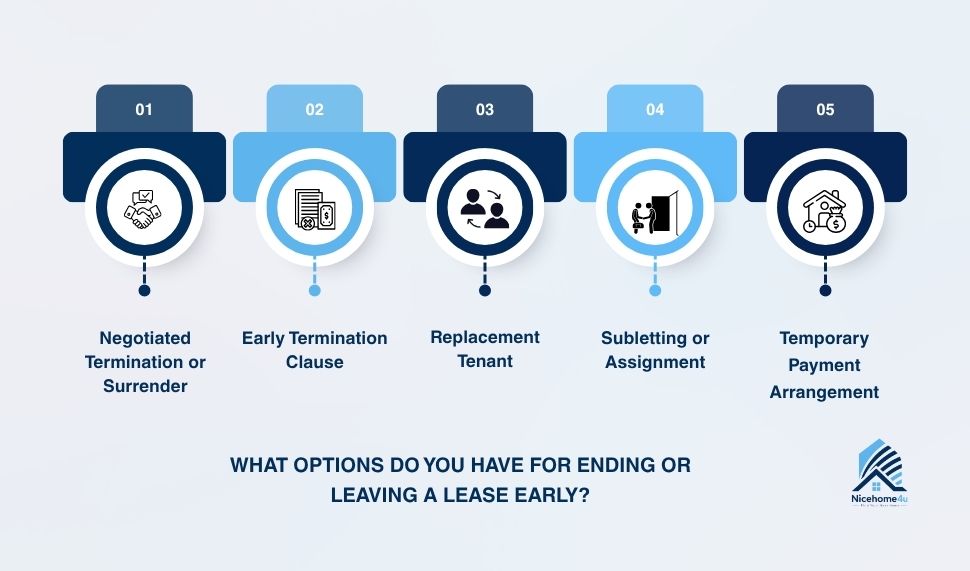
You may have more than one way to leave a rental before the lease ends. The right choice depends on your lease, your financial situation, and what your landlord or property manager is willing to approve.
Negotiated Termination or Surrender
You and your landlord may agree to end the lease on a specific date before the original end date. A written agreement can clarify when you will move out and whether any remaining amount is still owed.
Early Termination Clause
Your lease may already explain how you can end the agreement early. Check for the required notice, termination fee, and other conditions before relying on the clause.
Replacement Tenant
If permitted by the lease and approved by the landlord, finding a qualified replacement tenant may help you leave sooner. The new renter will usually need to complete the property’s normal application and screening process.
Subletting or Assignment
A sublease allows another person to rent the home under an arrangement connected to your existing lease, while an assignment may transfer your interest in the lease to someone else. Because these arrangements can affect who remains responsible under the rental contract, check your lease before pursuing either option.
Temporary Payment Arrangement
If your income loss is temporary, you may not need to end the lease immediately. Depending on the circumstances, discussing a short-term payment arrangement could give you time to recover financially without making an early move.
What Happens If You Move Out Before Your Lease Ends?
Moving out before your lease expires can have financial consequences, but what you may owe depends on your lease, what happens to the rental afterward, and applicable Oklahoma law.
Here are the main things to understand:
- Unpaid rent: Moving out does not automatically erase rent that has already become due. Depending on the circumstances, you may also have an obligation for certain losses connected to the early move-out.
- Landlord’s duty to mitigate: Oklahoma law requires an aggrieved party to mitigate damages. For a tenant who wrongfully abandons a rental, Oklahoma law also addresses the landlord’s reasonable efforts to make the dwelling available for rental.
- Security deposit: A landlord may apply a security deposit to accrued rent and qualifying damages. If part of the deposit is retained, Oklahoma law requires the remaining balance to be returned within 45 days after the tenancy ends, possession is delivered, and the tenant makes a written demand.
- Collections and rental history: If an amount remains unpaid and the parties do not resolve it, the balance could lead to collection activity or a legal dispute. A negative rental payment history may also make it harder to qualify for another rental home.
The key point is that moving out and resolving the lease are two different things. Knowing what happens to the remaining rent, deposit, and rental history can help you make a more informed decision before leaving.
How Can You Reduce the Financial Impact of Moving Out Early?
Before deciding that you need to break the lease, compare the full cost of moving with the cost of staying. If your income loss is temporary, financial assistance or a short-term arrangement may give you another option; if moving is unavoidable, planning the move carefully can help limit additional costs.
- Check for short-term financial assistance. If your hardship is temporary, look into rental assistance or other programs you may qualify for before taking on the costs of an early move. Don’t assume that a grant or assistance program will cover your rent without checking its eligibility requirements.
- Compare the cost of staying and moving. Consider your remaining rent, moving expenses, deposits for another rental, utility setup costs, and any potential lease-termination charges. Sometimes the cheapest solution is not the one that gets you out of the rental fastest.
- Reduce avoidable move-out costs. Return the property in good condition, remove your belongings, and document the home’s condition when you move out. This can help you avoid disputes over damage that you did not cause.
- Keep your rental records organized. Save your lease, notices, payment records, move-out documentation, and any agreement with your landlord. A clear record can become especially valuable if the final balance is disputed later.
- Think about your next rental. An unpaid rental balance or unresolved dispute can make finding another home more difficult. If possible, resolve the final account and keep documentation showing how the tenancy ended.
The goal is not simply to get out of the rental as quickly as possible. It is to make the housing change without creating a larger financial problem that follows you into your next rental.
What If Your Financial Hardship Is Only Temporary?
If you expect your income to recover soon, you may not need to move out immediately. First, consider whether you can manage the short-term gap without ending your lease.
If staying is no longer affordable even after exploring temporary options, then an early move may make more sense. The important thing is to base that decision on what you can realistically afford, rather than rushing out because of a temporary setback.
Conclusion
Losing a job or facing financial hardship can make your housing situation stressful, but you don’t have to make a rushed decision. If you’re considering breaking a lease due to financial hardship, understanding your options before moving can help you avoid unnecessary costs and make a more informed decision.
For Oklahoma City renters, that decision may depend on the lease terms, your ability to keep up with rent, and the Oklahoma rules that apply to your tenancy. If you’re looking for a rental home that better fits your current situation or want to explore available options, contact the Nicehome4u team about available rental homes before making your next move.