
Service dog laws in Oklahoma protect renters who use trained dogs for disability-related work. Rental housing follows the Fair Housing Act and Oklahoma Statutes Title 41, Section 113.2. These service dog rental laws govern accommodation requests, documentation, animal-related charges, denials, and renter responsibilities.
A service dog is not an ordinary pet. The renter still controls the animal and pays for actual damage. This guide explains how service dogs and renting work in Oklahoma. It also shows what information to provide before or during a rental application.
Key Takeaways
Five rules define the renter’s legal position. Task training establishes the animal’s status. Housing law controls the accommodation. Apparent need limits documentation. Approved accommodations avoid pet charges. Renters remain responsible for control, sanitation, and actual damage.
- Task training connects the dog’s work directly to a person’s disability.
- Housing protection allows an accommodation request in covered rental properties.
- Documentation depends on whether the disability-related need is readily apparent.
- Animal charges exclude pet fees and deposits but include actual damage costs.
- Renter responsibility covers control, sanitation, safety, and lease compliance.
What Is a Service Dog Under Oklahoma Rental Law?
Task training determines whether the dog qualifies. A service dog is individually trained to perform work or tasks for a person with a disability. The task must relate directly to that disability. Comfort or companionship alone does not satisfy the service dog definition.
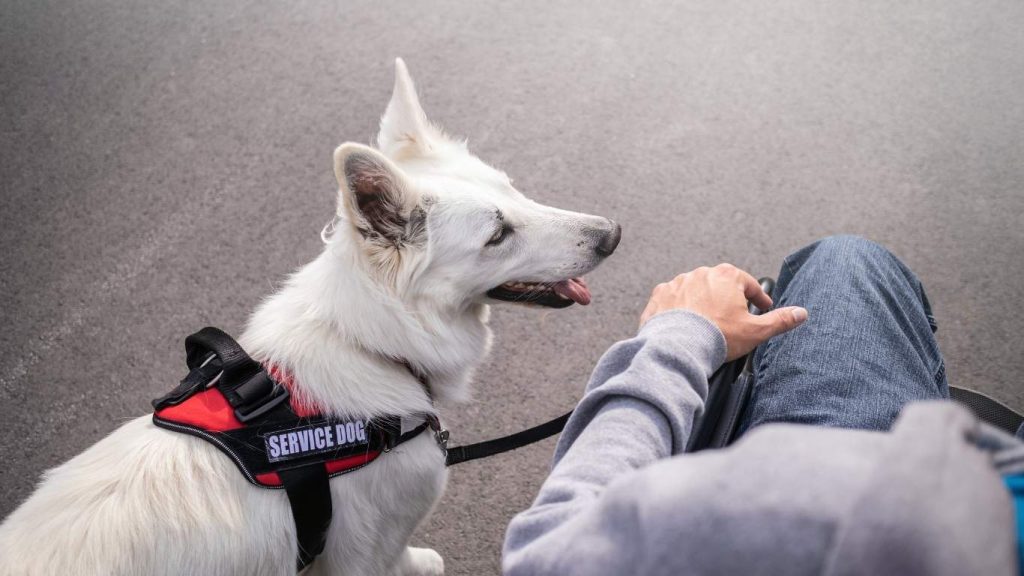
The Americans with Disabilities Act, or ADA, is the federal civil rights law that governs disability access in public places and specified government services. Service dogs in Oklahoma do not require professional training, a government certificate, a vest, or an identification card under the ADA.
What Tasks Can a Service Dog Perform?
A trained dog can perform six common types of work:
- Guide a person with a visual impairment.
- Alert a person who is deaf or hard of hearing.
- Retrieve medicine, a phone, or dropped items.
- Detect a seizure, blood-sugar change, or another medical event.
- Interrupt a panic attack or psychiatric episode.
- Support balance or physical stability.
A guide dog and a psychiatric service dog qualify under the same task-based standard. Breed, size, and appearance do not establish eligibility.
How Are a Service Dog, an Assistance Animal, and a Pet Related?
A service dog is one type of assistance animal. An assistance animal is the broader housing term for an animal that performs tasks, provides assistance, or supplies disability-related emotional support. A pet is an animal kept primarily for companionship without an approved disability-related housing function. Questions about service animals and renting begin with these distinctions.
This relationship controls how a lease applies. Pet rules govern ordinary pets. Reasonable-accommodation rules govern qualifying assistance animals. Nicehome4u’s guide to renting with pets in Oklahoma City explains the separate process for ordinary pets.
Which Laws Protect Oklahoma Renters With Service Dogs?
Two legal frameworks control most rental decisions. The federal Fair Housing Act prohibits disability discrimination in covered housing. Oklahoma Statutes §41-113.2 governs assistance-animal accommodation requests in Oklahoma dwellings. The ADA supplies a narrower service-animal definition for public-access settings.
What Does the Fair Housing Act Require?
The Fair Housing Act, codified at 42 U.S.C. §§3601–3619, prohibits housing discrimination based on disability. A housing provider is a landlord, property manager, owner, or other person who controls a housing decision.
The Act requires covered housing providers to evaluate reasonable-accommodation requests. A reasonable accommodation is an exception or adjustment to a rule, policy, practice, or service that gives a person with a disability an equal opportunity to use and enjoy a dwelling.
Federal law recognizes four principal housing exemptions:
- Owner-occupied buildings containing no more than four units.
- Qualifying single-family homes rented without a broker by an owner who owns no more than three homes.
- Qualifying religious-organization housing reserved for members of that religion.
- Qualifying private-club lodging reserved for club members.
Additional statutory conditions control these exemptions. Federal advertising rules and state or local laws can still govern an exempt property.
Section 504 of the Rehabilitation Act also prohibits disability discrimination in federally funded housing programs. HUD’s Housing Choice Voucher guidance directs voucher tenants to request a reasonable accommodation for a service animal or emotional support animal.
What Does Oklahoma Statutes §41-113.2 Require?
Oklahoma Statutes Title 41, Section 113.2 defines an assistance animal and authorizes a person with a disability to request one in a dwelling. The statute also defines the documentation standard when the disability or disability-related need is not readily apparent.
Oklahoma service animal laws also include House Bill 1178, enacted in 2025. The law took effect on November 1, 2025. It reinforces task training, regulates public-access inquiries, and makes intentional misrepresentation of a pet as a service animal a misdemeanor. It does not replace the housing process in Title 41.
Nicehome4u’s guide to Oklahoma tenant rights and responsibilities explains the broader legal relationship between renters and landlords.
Why Do ADA Public-Access Rules Differ From Housing Rules?
The ADA permits a public business to ask two questions: whether the dog is required because of a disability and what work or task the dog performs. Housing requests follow the Fair Housing Act and Oklahoma Title 41. Those laws permit a different documentation analysis.
A landlord is not always restricted to the ADA’s two questions. The landlord also cannot demand an applicant’s complete medical history or information unrelated to the accommodation request.
Do No-Pet Policies Apply to Service Animals in Rentals?
A no-pet policy does not automatically exclude a qualifying animal. A renter can request an accommodation that exempts the service animal from pet rules. The landlord must evaluate the request under disability-housing law instead of classifying the animal as an unauthorized pet.
The relationship between service animals and rentals requires a separate disability-housing analysis. The following four pet rules do not decide the accommodation:
- Breed restrictions cannot replace an assessment of the individual animal.
- Weight limits cannot establish whether a trained dog qualifies.
- Pet limits cannot automatically count an approved assistance animal as an ordinary pet.
- No-pet clauses cannot eliminate the accommodation process in covered housing.
Service dog rights require an individualized decision. An individualized assessment examines the specific animal’s conduct, history, and documented risk. It does not rely on breed stereotypes or generalized fear.
What Documentation Can a Landlord Request for a Service Animal?
The allowed documentation depends on what is already apparent. A landlord cannot request more information when both the disability and the need for the animal are known or obvious. Oklahoma law permits reliable supporting documentation when either element is not readily apparent.
What Happens When the Disability and Need Are Apparent?
The landlord does not need additional disability documentation when the disability and disability-related needs are already known. A renter who is blind and uses a guide dog presents an apparent connection between the disability and the trained task.
What Happens When the Need Is Not Apparent?
Oklahoma Statutes §41-113.2 permits documentation that establishes three facts:
- Verifies that the renter meets the Fair Housing Act definition of disability.
- Describes the accommodation requested from the landlord.
- Connects the person’s disability to the need for the animal.
The landlord can verify the authenticity of the submitted material. Oklahoma law presumes documentation obtained through a purchase or exchange of funds for goods or services to be fraudulent. Renters must avoid websites that sell instant letters, registrations, or identification cards.
Does a Service Dog Need Certification or Registration?
No official federal service-dog registry exists. Federal law does not require a certificate, identification tag, or vest. A purchased document does not prove that the dog is trained to perform disability-related tasks.
Certification and housing documentation serve different functions. The first claims that an animal has a status. The second supplies reliable information about a disability-related need when housing law authorizes the request.
How Do You Request a Reasonable Accommodation for a Service Dog?
A clear accommodation request starts the housing process. Tell the landlord that a disability requires an exception to a housing rule. Identify the requested change and the animal’s disability-related function. Submit reliable supporting information only when the law permits the landlord to request it.
Use this six-step process:
- Review the rental application, lease agreement, and accommodation instructions.
- State the policy exception or adjustment you need.
- Explain the dog’s disability-related work or tasks.
- Provide reliable supporting information when the need is not apparent.
- Retain the request, attachments, delivery record, and response.
- Confirm whether the landlord requires legally relevant information.
The Fair Housing Act does not require a specific form or phrase. An oral request can start the process. A written request creates a dated record and reduces disagreement about what the renter requested.
A renter can submit the request before applying, during screening, after signing the lease, or after a lease issue arises. Earlier notice gives both parties time to exchange relevant information before move-in.
Can a Landlord Charge Pet Fees or a Deposit for a Service Dog?
An approved accommodation carries no animal-specific housing charge. A covered landlord cannot condition approval on pet rent, a pet fee, or an additional pet deposit. The landlord can collect the standard security deposit and charge the renter for actual damage caused by the animal.
The HUD and Department of Justice reasonable-accommodation statement separates an accommodation charge from a damage charge. The landlord cannot charge $300 solely because the trained dog lives in the home. The landlord can charge $300 when documented repairs for dog-caused damage total $300 and the same damage policy applies to every tenant.
Normal wear and actual damage are different. Normal wear results from ordinary residential use. Actual damage includes a chewed door, torn flooring, or broken fixture caused by the animal.
When Can a Landlord Deny or End a Service-Animal Accommodation?
Denial requires a recognized legal basis and case-specific evidence. A landlord can deny a request that lacks a qualifying disability-related need, imposes an undue financial and administrative burden, fundamentally alters the housing operation, or involves a specific animal that creates a direct threat.
A direct threat is a significant risk to the health or safety of other people that cannot be reduced through another reasonable accommodation. Substantial physical damage means significant harm to another person’s property. Both determinations require evidence about the specific animal.
The following four facts can support a case-specific decision:
- Documented attacks show the animal’s history of dangerous conduct.
- Repeated uncontrolled behavior shows that the handler has not maintained control.
- Documented property destruction shows the nature and extent of physical damage.
- Rejected effective safeguards show that a proposed solution did not resolve the identified risk.
Breed, size, and insurance assumptions do not prove a direct threat by themselves. The landlord must evaluate the animal’s conduct and the available risk-reduction measures.
What Responsibilities Does a Renter Have for a Service Dog?
The renter controls the animal and pays for actual damage. An accommodation changes a pet rule; it does not eliminate conduct, sanitation, safety, or damage obligations. The renter must supervise the dog and follow lease provisions that apply equally to every resident.
The renter retains six core responsibilities:
- Control the dog inside the unit and in common areas.
- Remove animal waste from the property.
- Prevent repeated barking or other avoidable disturbances.
- Follow local licensing and rabies-vaccination requirements.
- Repair or pay for documented animal-caused damage.
- Comply with generally applicable health and safety rules.
Disputes involving service animals and rental property damage follow the same evidence-based approach. The landlord can address harmful conduct without treating the approved animal as a pet. The response must focus on the conduct, the lease provision, and an available accommodation that resolves the problem.
How Is a Service Dog Different From an Emotional Support Animal in Oklahoma?
Task training separates the two housing concepts. A service dog performs disability-related work or tasks. An emotional support animal provides support that alleviates a disability-related symptom or effect. Both can fall within the broader housing category called an assistance animal.
| Attribute | Service dog | Emotional support animal |
| Primary function | Performs disability-related work or tasks | Provides disability-related emotional support |
| Task training | Required | Not required |
| ADA public access | Covered when ADA requirements are met | Not covered as a service animal |
| Housing category | Assistance animal | Assistance animal when the legal requirements are met |
| Supporting information | Depends on whether the need is apparent | Common when the disability-related need is not apparent |
Oklahoma emotional support animal laws concern housing accommodation, not automatic access to restaurants, stores, or other public places. An emotional support animal in Oklahoma does not gain ADA public-access rights through a housing approval.
ESA documentation and current federal enforcement guidance require a separate legal analysis. Renters must evaluate those requirements instead of transferring every service-dog rule to an emotional support animal.
What Can a Renter Do After a Service-Dog Accommodation Is Denied?
Document the denial and request a prompt review. Ask the landlord to identify the legal and factual basis for the decision. Supply missing information that housing law permits. Preserve every request, attachment, delivery record, response, notice, and lease document.
Use four next steps:
- Request the denial and supporting reason in writing.
- Correct missing or unreliable documentation.
- Propose another accommodation that resolves a documented concern.
- Contact a named enforcement or legal resource when the dispute remains unresolved.
The U.S. Department of Housing and Urban Development, or HUD, enforces the Fair Housing Act. A renter can file a federal housing-discrimination complaint within one year of an alleged discriminatory housing practice. HUD’s Fair Housing resources explain the process. Legal Aid Services of Oklahoma or a licensed attorney can advise on an individual case.
Conclusion
Renters with qualifying service dogs can request a reasonable accommodation in covered Oklahoma housing. A no-pet policy does not eliminate that process. Landlords can request limited supporting documentation when the disability-related need is not apparent. A denial requires a recognized legal reason supported by case-specific evidence.
Prepare the accommodation request before applying when possible. Keep the written request, supporting information, delivery record, and landlord response. Continue controlling the dog and paying for actual animal-caused damage throughout the tenancy.
Review the property details and rental criteria before paying an application fee. Nicehome4u renters can browse available Oklahoma City metro rentals and contact the team about the accommodation process for a specific property.
What Other Questions Do Oklahoma Renters Ask About Service Dogs?
Five related questions cover timing, local dog rules, multiple animals, and lease enforcement. These issues do not change the core accommodation standard. Each one depends on the animal’s disability-related function, the renter’s documentation, and the rules that apply to every resident.