
If you’ve ever fallen in love with an apartment listing, then scrolled down and seen the words “no pets,” you know exactly how disheartening renting with pets can feel. Finding a rental home or an apartment with your pets is a challenging job. You may likely encounter pet policies, additional fees, breed restrictions, and application requirements that can make the process stressful.
I’ve seen many renters simply check “pet allowed” while applying for rent. That’s why many applications fail. Landlords want to make sure that your pet won’t damage the property and create problems for neighbors. Once you understand how landlords actually think and what they’re looking for, renting with pets stops feeling like a gamble and becomes a process you can easily manage. If you’re searching for a pet-friendly rental in Oklahoma City, understanding what local property managers and landlords expect can save your time and improve your chances of getting approved.
This guide walks you through the real problems pet owners run into, the solutions that actually work, and the exact steps you need to take before you apply. We’ll cover everything you need to know, from pet-friendly rental requirements, pet rules, and the common mistakes that renters make. By the end, you’ll know what exactly to do before applying.
Key Takeaways
- Renting with pets requires more preparation and is harder than renting without them.
- Landlords are managing risk, so they have specific pet-friendly rental requirements that include breed, weight, and vaccination rules.
- A well-prepared pet resume and proof of training can help with fast approval.
- Some pet fees are negotiable, so understand pet deposits, pet fees, and monthly pet rent.
- Knowing your rights legally(including assistance animals) protects you from unfair denials.
Why Renting with Pets Can Be More Challenging and Feels So Hard
Let’s be honest about how most landlords think about pets. They are not anti-animal, but they’re anti-risk. Every landlord thinks pets are a potential liability, such as the cost of re-carpeting, damaged floors, noise complaints from neighbors, and the liability if a dog bites someone. In reality, every landlord has different expectations, and even properties that allow pets may have restrictions you need to meet.
Landlords have some rental listings regarding cats and dogs. Some listings welcome only cats and set criteria for dogs, such as dog breed and weight. You may also face some restrictions like dog breed, number of pets, and pet documentation. So, before applying, you must understand these expectations early, which can save you time and get fast approval.
Here are some of the most common challenges renters face:
- Scarcity of pet-friendly rentals
- Limits on your pet’s size or breed
- Surprise monthly fees and non-refundable pet fees
- Higher security deposits
- Tough lease rules for pet behavior
- Competition from applicants without pets
The first thing is to prepare your application before you begin your search. If you’re a responsible pet owner, landlords might be willing to consider your application even when they receive many inquiries.
Common Challenges and Practical Solutions
| Challenge | Practical Solution |
|---|---|
| Limited pet-friendly listings | Start your search early and set alerts on rental websites. |
| Breed restrictions | Ask about restrictions before scheduling a viewing. |
| Additional pet fees | Include pet costs in your rental budget. |
| Landlord concerns | Prepare a professional pet resume and references. |
| Multiple applicants | Submit a complete application with all required pet documents. |
Finding Pet-Friendly Rentals in Oklahoma City
If you’re searching for a pet-friendly rental in Oklahoma City, it’s important to know that not every property advertised as “pets allowed” follows the same rules. Some landlords welcome cats and dogs, while some may only accept cats or dogs. Depending on the landlord’s requirements, you must follow the rules and requirements regarding breed, weight, age, or the number of pets allowed. Take your time before applying and reduce the chances of receiving a denial.
In my experience, one of the biggest mistakes renters make is falling in love with a property before confirming its pet policy. I’ve found it’s much more effective to contact the property manager early, ask detailed questions, and have your pet documents ready before scheduling a tour. This simple step can help you focus only on rentals that are a realistic fit for you and your pet.
1. Start Your Search Early
Pet-friendly rentals in Oklahoma City are often in high demand. Pet-friendly rentals in Oklahoma City are often in high demand. Homes with fenced yards or apartment communities offer amenities such as dog parks, walking trails, and pet-washing stations. If you desire to move quickly, then you need to begin your search several weeks ahead because these properties tend to lease quickly.
Read the full property description and review the pet policy carefully, and don’t rely solely on the “pets allowed” filter. Breed restrictions, weight limits, and monthly pet rent may only appear in the listing or lease terms.
2. Know What Different Property Types Offer
Here are a few different property types that you must know.
| Property Type | What Pet Owners Should Expect |
|---|---|
| Apartment Communities | More pet-friendly amenities but have some strict policies regarding breed, weight, and pet limit. |
| Single-Family Homes | Larger outdoor spaces and great for privacy, but pet deposits may be higher. |
| Duplexes and Townhomes | A balance between apartment living and detached homes. Owners have their own pet policies. |
If you have a big dog or multiple pets, expand your search to include rental houses, which can provide more options than an apartment.
3. Ask the Right Questions Before You Apply
Contact the landlord or property manager and ask a few important questions before paying an application fee. It can help you to avoid applying for a property that doesn’t meet your needs.
Important questions to ask:
- Are there any dog breed or weight restrictions?
- What are the limitations of pets?
- Is there a refundable pet deposit policy?
- Do I need to pay monthly pet rent?
- Are vaccination records compulsory?
- Does the property have a pet-friendly outdoor space?
- Should I know about HOA or community pet rules?
If you’re ready to begin your search, you can browse our available rental homes in Oklahoma City before submitting an application.
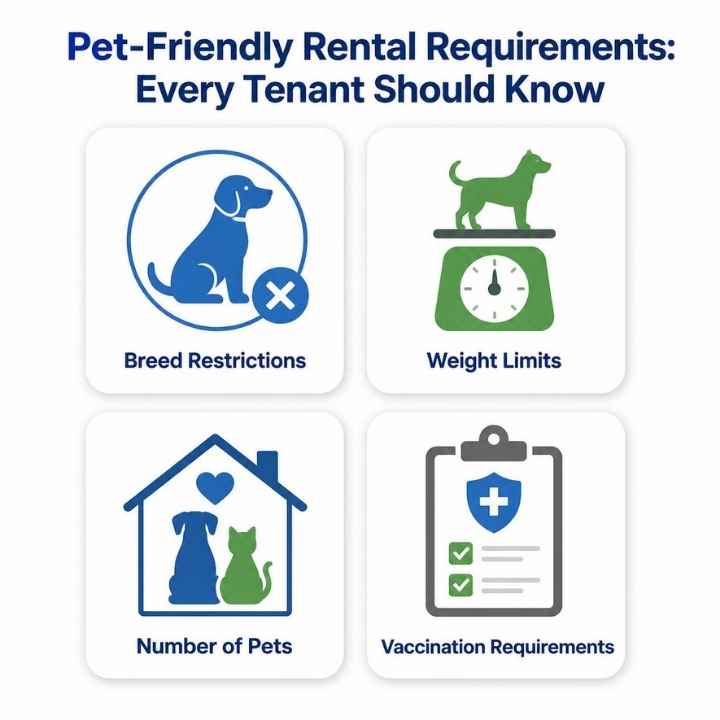
Pet-Friendly Rental Requirements: Every Tenant Should Know
Every rental property has its own pet policy, but you’ll notice several requirements appear consistently across many leases. Understanding pet-friendly rental requirements helps you prepare exactly what’s needed instead of guessing.
Here are the essential pet-friendly requirements every tenant should know before applying.
1. Breed Restrictions
Some landlords limit certain breeds because insurance policies often exclude certain breeds. Ask your owner about restrictions on larger breeds.
If you want to build trust and prevent complications later, you must be transparent about your pet at the beginning.
2. Weight Limits
Many apartment communities have maximum weight limits for dogs. Even if your pet is well-behaved, you must have to remain within the property’s limit, or it may result in an automatic denial.
Before paying an application fee, you must verify the weight requirements of your pet.
3. Number of Pets
Some landlords permit only one pet, while others allow two with additional fees. Ask the landlords about the additional fees for the number of pets before applying.
If you have multiple pets, ask questions such as:
- Is there a limit on the number of pets?
- Are different breeds allowed?
- Do additional pets require extra deposits?
4. Vaccination Requirements
Before move-in, most landlords require proof that your pets are well vaccinated. It reduces the landlord’s liability and health risk. To understand the core vaccines recommended for dogs and cats, review the AAHA pet owner education resources.
- Common requirements include:
- Rabies vaccine
- Distemper vaccine
- Bordetella vaccine (for dogs in some communities)
You must keep an updated digital copy of your pet’s records. It helps to make the approval process much smoother.
Renting With Pets Rules You Need to Know Before You Sign
Every lease is different, but most renting with pet rules fall into a few recognizable categories. One area that often confuses renters is the difference between Pet deposit, Pet fees, and Pet rent. Here is a clear overview to make sure the cost is refundable or not and the purpose of these fees.
| Cost Type | Refundable | Purpose |
|---|---|---|
| Pet Deposit | Yes | It covers potential pet-related damage beyond normal wear and tear. |
| Pet Fee | No | A one-time administrative fee for allowing pets. |
| Monthly Pet Rent | No | An additional recurring charge added to your monthly rent. |
Ask your landlord to explain each fee, and before signing a lease, you must know exactly what you’re paying for. If you’re renting in Oklahoma, it’s also helpful to review Oklahoma landlord-tenant legal information before signing a lease.
Getting approved is only the beginning. Following your lease agreement helps maintain a positive relationship with your landlord and reduces the likelihood of future issues.
- Some of the most common rules for renting with pets include:
- Make sure you always clean up your pet
- Keep pets leashed in common areas
- Prevent excessive barking or noise
- Pet-related damage should be repaired or reported to the landlord
- Avoid unauthorized pets on the property
- Must follow all the community pet policies
Responsible pet ownership benefits everyone in the community and increases your chances of receiving positive rental references in the future.
How to Rent with Pets Successfully: A Step-by-Step Process
Before submitting your application, review the rental application process so you know exactly what documents you’ll need. Responsible preparation demonstrates to landlords that you’re serious about caring for both your pet and the property. Instead of waiting for a landlord to request information, prepare everything in advance. This helps to speed up the application process and build trust from the beginning.
If you want a clear answer to how to rent with pets successfully, follow this order.
Step 1: Build a Pet Resume
A pet resume introduces your pet in a professional and organized way. Many property managers appreciate applicants who provide a pet resume.
A pet resume includes details such as:
- Photo, pet’s name, age, and breed
- Weight and size
- Vaccination status
- Spay or neuter status
- Training certifications
- Personality traits
- Previous rental history
- Veterinarian contact information
To personalize your application and reassure landlords, you must add a recent photo of your pet.
Step 2: Gather Veterinary Records
Current vaccination records show that your pet receives proper medical care and poses minimal health risks to other residents. You can also review the CDC Healthy Pets guidance to learn how vaccinations and preventive care help protect both pets and people.
Veterinary records must have copies of:
- Rabies vaccination
- Core vaccinations
- Annual wellness exams
- Flea and tick prevention records (if applicable)
During the screening process, the landlord may request proof, and having these documents ready allows you to respond quickly.
Step 3: Ask for References
A note from a previous landlord or vet confirming good behavior carries real weight. Positive references can strengthen your application significantly.
Consider requesting recommendations from:
- Previous landlords
- Veterinarians
- Professional pet sitters
- Dog trainers
For valuable reassurance, a short letter can confirm that your pet behaved well in a previous rental.
Step 4: Consider Pet Insurance
Although not every landlord requires pet insurance, carrying liability coverage demonstrates responsibility. Some policies also help cover accidental property damage or injuries, which can make landlords more comfortable approving your application.
Renting an Apartment with Pets vs. Renting a House with Pets
This is a decision I see tenants overlook constantly, and it genuinely changes your odds. Renting an apartment with pets usually means dealing with building-wide insurance policies, HOA rules, and shared spaces, all of which add layers of restriction you can’t negotiate individually.
Both options have advantages and challenges. Your choice depends on your pet’s needs, lifestyle, and budget.
| Renting an Apartment with Pets | Renting a House with Pets |
|---|---|
| More shared spaces | More privacy |
| Strict pet policies | More flexibility |
| Weight and breed restrictions | Few restrictions |
| Monthly pet rent | Pet rent may not always apply |
| Limited outdoor space | Private yard |
If you have a big dog or an active dog, renting a house with pets may provide a better environment. On the other hand, apartments can work well for smaller pets if the community offers pet-friendly amenities such as dog parks or walking areas. Before moving in, consider following ASPCA pet safety tips to make your new home safer for your pet.
What’s Changing in Pet-Friendly Renting Right Now
In the last few years, the rental market has shifted noticeably, and it’s worth understanding why before you start applying. More renters delayed homeownership and adopted pets during periods of remote work, which means demand for rooms for rent with pets allowed has grown faster than the supply of pet-friendly units.
More property managers now use platforms such as PetScreening to review vaccination records, behavior history, and even bite insurance in one profile you can reuse across multiple applications. Many professional property managers now use standardized pet screening tools to simplify the approval process and maintain consistent pet policies.
If you’re serious about renting with pets long-term, building one of these reusable profiles early can save you from re-submitting the same documents over and over.
Common Mistakes Tenants Make When Renting with Pets
One of the easiest ways to improve your chances of approval is to fill out a rental application correctly and provide complete information. I’ve watched people make the same few mistakes over and over. Fortunately, most of these issues are easy to avoid with proper preparation. So let’s cover them here so you don’t repeat them. So let’s cover them here so you don’t repeat them.
1. Waiting Too Long to Start the Search
In competitive markets like Oklahoma City, pet-friendly rentals often lease so quickly. Starting your search early gives you more options and reduces pressure to settle for a property that isn’t the right fit. If this is your first rental, our guide for first-time renters explains what to expect before applying.
2. Hiding Your Pet
Some renters assume it’s easier not to mention a pet during the application process. However, if the landlord discovers an unauthorized pet after move-in, it almost always damages trust and can void a lease entirely.
3. Ignoring Breed or Weight Restrictions
Submitting an application for a property that doesn’t allow your pet’s breed or size can waste both time and money. Before paying application fees, you must read the listing carefully and ask the questions to the landlord.
4. Incomplete Documentation
Missing vaccination records, references, or pet information can delay your application. Landlords will review your application more efficiently if you prepare these documents in advance.
5. Not Reading the Pet Policy
Every lease is different, so before signing the lease, you must understand these things:
- Pet deposits
- Monthly pet rent
- Cleaning expectations
- Damage responsibilities
- Pet behavior requirements
Knowing these details upfront helps prevent misunderstandings after move-in.
Final Thoughts
Renting with pets doesn’t have to be stressful. It is genuinely more work than renting without them, but it’s rarely as hopeless as it first feels. While the process may involve additional paperwork, fees, and property requirements, a little preparation can make a significant difference.
By understanding pet-friendly rental requirements, following lease rules, and presenting yourself as a responsible tenant, you’ll improve your chances of finding a home that’s a great fit for both you and your pet.
If you’re searching for a pet-friendly rental in Oklahoma City, start by identifying properties that match your needs, preparing your application documents, and asking the right questions before signing a lease. Taking these proactive steps can help you avoid common challenges and move into your new home with confidence.
Ready to Find a Pet-Friendly Rental in Oklahoma City?
Looking for a rental that’s welcoming to both you and your pet? Browse our available rentals in Oklahoma City to explore pet-friendly homes, or contact our team if you have questions about pet policies, rental requirements, or the application process. We’re here to help you find a place you’ll both love.