
Quick Answer
Your landlord generally must maintain appliances they supply or agree to provide, unless you or someone in your household causes the damage. You are usually responsible for appliances you own and damage caused by your misuse or negligence. In Oklahoma, who is responsible for appliances in a rental property depends on what the landlord supplied or agreed to supply, your lease, any applicable separate written agreement, and the cause of the problem.
When you move into a rental home, you may assume that every appliance already there is your landlord’s responsibility. But what happens when something stops working? Are you expected to pay for the repair, or does the landlord handle it? Understanding who owns each appliance and who agreed to maintain it can help you avoid unexpected costs and disagreements.
Nicehome4u has provided rental homes across the Oklahoma City metro since 2011. This guide explains how appliance responsibilities work and what to check before paying for a repair or replacement.
Let’s start by identifying which appliances are part of your rental.
How to Determine Who Is Responsible for an Appliance?
Start by identifying which appliances your landlord supplied or agreed to provide. An appliance’s presence in the home does not always establish who owns it or who must maintain it.
Check the Lease and Move-In Inventory
Review your lease and move-in condition report to identify the appliances included with the property. Check whether the documents identify the supplied equipment and any specific maintenance responsibilities.
If an appliance is present but the documents do not clearly identify it, ask your landlord or property manager for written confirmation. This is especially important when a previous tenant left an appliance behind.
Under 41 O.S. § 118(A)(3), Duties of Landlord and Tenant, landlords must maintain covered facilities and appliances they supply or are required to supply in good and safe working order.
Oklahoma law also allows landlords and tenants to agree through a conspicuous written agreement, independent of the rental agreement, that the tenant will perform specified repairs or maintenance tasks. This does not mean an ordinary lease clause automatically transfers every landlord responsibility to the tenant.
Which Appliances Must a Landlord Maintain?
When a landlord supplies an appliance as part of the rental, the landlord generally has a responsibility to maintain it. However, Oklahoma law does not require landlords to provide every household appliance.
Common Landlord-Provided Appliances
Depending on the rental property, supplied appliances may include:
- Kitchen appliances: Refrigerators, stoves, ovens, dishwashers, and microwaves.
- Laundry appliances: Washing machines and dryers.
- Heating and cooling equipment: Furnaces and central air-conditioning systems.
These are examples of equipment a rental property may include, not a list of appliances every landlord must provide. Oklahoma law specifically addresses heating, ventilation, and air-conditioning facilities, along with other facilities and appliances supplied or required to be supplied by the landlord.
If a supplied appliance stops working through ordinary use or deterioration, the landlord generally must address the issue and maintain it in good and safe working order.
Are Landlords Required to Provide Washing Machines and Dryers?
No. Oklahoma’s landlord maintenance statute does not generally require landlords to provide washing machines or dryers. It addresses the maintenance of appliances supplied or required to be supplied by the landlord.
A rental home may have laundry hookups without the machines. If the landlord supplies these machines, the landlord’s applicable maintenance responsibilities generally cover them.
If you bring your own laundry equipment, you generally handle its upkeep and repairs. Check with your landlord before installing equipment that needs plumbing or electrical connections, and do not assume you can modify the property’s connections without permission.
Which Appliances Are Tenants Responsible For?
Tenants generally look after appliances they own and must use landlord-provided appliances safely. However, a tenant does not automatically become responsible for a supplied appliance just because it stops working.
Maintaining Tenant-Owned Appliances
If you purchase and bring your own appliance into the property, you generally arrange and pay for its maintenance, repair, or replacement.
Before installing it, check your lease and ask about any property requirements. This is particularly important for equipment that needs plumbing connections, electrical work, or changes to the home.
Proper Use and Responsibility for Tenant-Caused Damage
Under 41 O.S. § 127, Duties of Tenant, tenants must use appliances and other property facilities safely and in a nondestructive manner. The law also prohibits deliberate or negligent damage to the premises.
A tenant may be responsible if careless use or improper handling damages a supplied appliance. However, a failure caused by age or ordinary use does not automatically make the tenant liable.
For more information about tenant obligations, read our guide to tenant repair responsibilities in Oklahoma.
Who Pays for Appliance Repairs or Replacement?
Responsibility depends on who supplied the appliance and what caused it to fail. Repairing an appliance and replacing it are also different decisions.
If the landlord supplied the appliance and it stops working through ordinary use or deterioration, the landlord generally handles the applicable repair. If the appliance cannot be restored to safe working order, replacement may be necessary. If you own the appliance, you generally pay for its upkeep and replacement.
When Can a Tenant Be Charged?
A landlord may seek payment when a tenant’s misuse or negligence causes damage to a supplied appliance. Any charge should relate to the damage the tenant caused.
However, a breakdown alone does not establish that the tenant must pay. If you receive an appliance-related charge, ask for an explanation of what caused the damage and how the amount was calculated before agreeing to pay.
Normal Wear and Tear vs. Tenant-Caused Damage
An appliance can deteriorate through age and regular use. That is different from damage caused by careless handling, misuse, or negligence.
A tenant should not automatically be charged simply because an appliance has reached the end of its useful life. The cause of the problem matters.
For more examples, read our guide to normal wear and tear in a rental home.
Who Decides Whether to Repair or Replace a Supplied Appliance?
When a landlord-provided appliance breaks, the landlord generally coordinates the decision to repair or replace it, subject to applicable legal duties and the rental agreement.
Repair may be appropriate when a technician can restore the appliance to safe working order. Replacement may be more suitable when the appliance cannot be restored safely or reliably.
Do not remove a supplied appliance, arrange a major repair, or purchase a replacement and expect reimbursement without first discussing the situation with your landlord and obtaining written approval.
What to Do When a Supplied Appliance Stops Working
If a supplied appliance stops working, report the issue through the maintenance process specified by your landlord or property manager. Keep a copy of your request and any responses.
For a clear record, follow these steps:
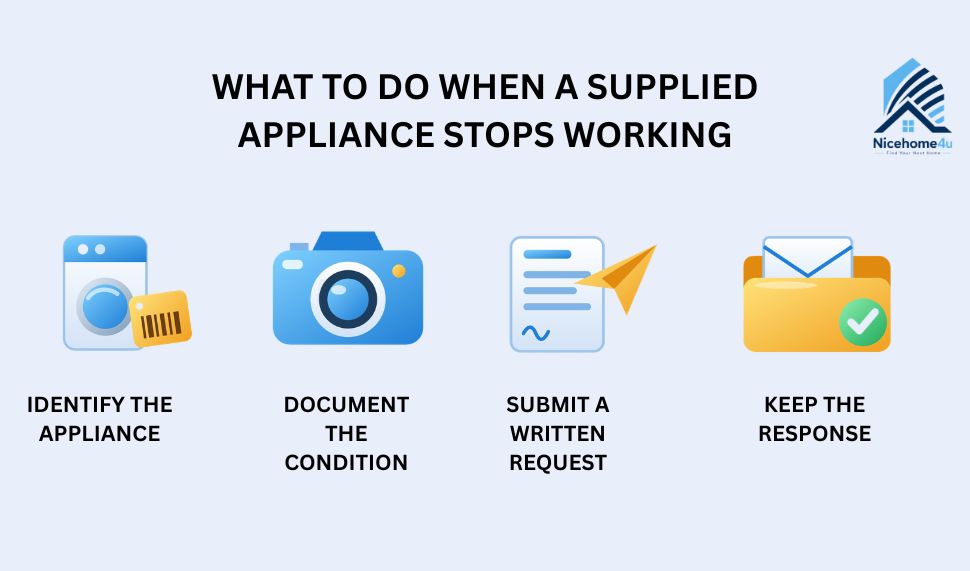
- Identify the appliance: State which appliance is affected and describe the problem.
- Document the condition: Take photographs or videos when they help explain the issue.
- Submit a written request: Use the required maintenance channel and keep the confirmation.
- Keep the response: Save messages, repair updates, and any explanation of charges.
Nicehome4u residents can follow our guide to submitting a maintenance request for instructions on using the AppFolio Tenant Portal.
Understanding Your Legal Options in Oklahoma
If your landlord does not address a qualifying appliance problem, review your lease and the applicable Oklahoma law.
Under 41 O.S. § 121, Landlord’s Breach of Rental Agreement and Tenant Remedies, certain material landlord breaches may give tenants legal remedies.
Subsection B provides a repair-and-deduct procedure when a material noncompliance affects health and the problem can be corrected through repairs costing no more than one month’s rent. The tenant must give written notice of the intention to repair at the landlord’s expense after the statutory notice period. Generally, the landlord has 14 days to address the problem. In an emergency, the law requires a response as promptly as conditions require. The tenant must also follow the statute’s requirements for completing the work and providing an itemized statement.
This procedure does not apply automatically to every broken appliance. Do not withhold rent, arrange a replacement, or deduct costs without first confirming that the legal requirements apply. Consider speaking with an Oklahoma attorney before taking legal action.
Final Thoughts on Appliance Responsibilities in Rental Properties
Knowing who is responsible for appliances in a rental property can help you avoid unexpected expenses and disagreements. Start by checking which appliances your landlord supplied, what your lease says, and whether you or someone in your household caused the damage.
If an appliance stops working, report the problem through the proper maintenance channel and keep a written record. Do not arrange a replacement or agree to pay a charge until you understand your responsibility.
If you have questions about an appliance or need clarification about your responsibilities as a Nicehome4u resident, contact us. We’re happy to help you understand the next steps.