You finally found an apartment that checks all the boxes.
The location is perfect. The rent fits your budget. You can already imagine where your couch, dining table, and TV will go.
Then the landlord sends over the lease.
Suddenly you’re looking at a long list of charges:
- Security Deposit
- Move-In Fee
- Application Fee
- Administrative Fee
- Pet Fee
- Holding Fee
If you’re like many renters, especially if this is your first apartment, you’ve probably asked yourself:
“Why am I paying all these fees?”
“Which ones do I get back?”
“Are landlords allowed to charge both a security deposit and a move-in fee?”
These are some of the most common questions tenants have, and for good reason. Moving is already expensive, and misunderstanding these charges can cost you hundreds, or even thousands, of dollars.
At NiceHome4U, we believe informed renters make better decisions. Understanding the difference between a security deposit and a move-in fee helps you budget more accurately, recognize unfair charges, and avoid unpleasant surprises when it’s time to move out.
This guide explains everything tenants should know before handing over their money.
The Short Answer
If you’re looking for a quick explanation, here’s the difference.
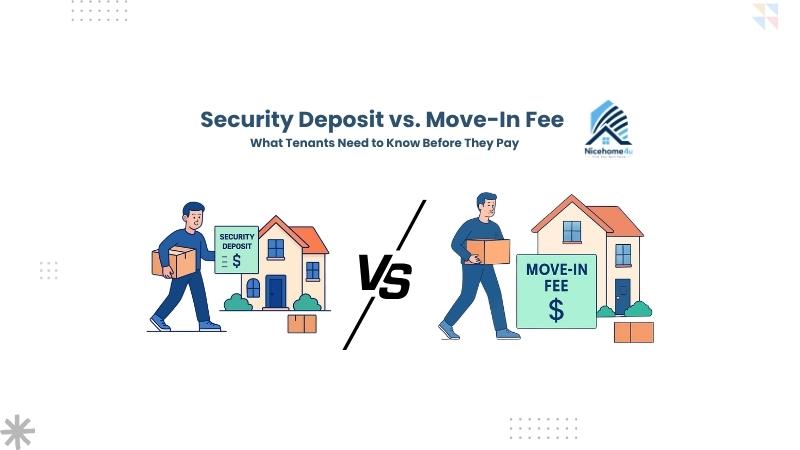
Security Deposit
A security deposit is refundable money your landlord holds during your tenancy. If you pay rent on time, follow your lease, and leave the property in good condition (allowing for normal wear and tear), you should receive most, or all of it back after moving out.
Move-In Fee
A move-in fee is non-refundable. It’s a one-time charge that helps cover the landlord’s costs for preparing the property, administrative work, changing locks, or other move-in expenses. Once you pay it, you generally won’t receive it back.
The simplest way to remember it:
- Security Deposit = Your money being held temporarily.
- Move-In Fee = A cost of moving into the property.
Security Deposit vs. Move-In Fee at a Glance
| Feature | Security Deposit | Move-In Fee |
| Refundable? | Usually yes | No |
| Purpose | Covers damage or unpaid rent | Covers landlord’s move-in costs |
| Returned after moving out? | Usually | Never |
| Typical Cost | One month’s rent (sometimes more) | Flat fee, often much smaller |
| Protected by state laws? | Usually yes | Often less regulated |
| Best viewed as | Money you’re lending | Money you’re spending |
Understanding Your Total Move-In Costs
One mistake many renters make is focusing only on the monthly rent.
Imagine two apartments.
Apartment A rents for $1,400.
Apartment B rents for $1,450.
Apartment A might look cheaper at first, but what if Apartment A requires:
- First month’s rent
- Last month’s rent
- Two-month security deposit
while Apartment B only requires:
- First month’s rent
- Small move-in fee
Suddenly, Apartment B may require thousands less upfront.
Instead of asking,
“How much is the rent?”
ask,
“How much money do I need before I get the keys?”
That’s your true move-in cost.
What Do Tenants Usually Pay Before Moving In?
Every property is different, but these are the most common upfront costs renters encounter.
First Month’s Rent
Almost every landlord requires your first month’s rent before you move in.
Security Deposit
Usually equal to one month’s rent, although some landlords request more depending on your rental history, credit, pets, or local laws.
Move-In Fee
A one-time, non-refundable charge.
Application Fee
This usually covers:
- Credit check
- Criminal background check
- Rental history verification
Administrative Fee
Some apartment communities charge administrative fees for:
- Processing paperwork
- Creating lease documents
- Setting up tenant accounts
- Preparing keys or access cards
Pet Deposit or Pet Fee
These are often confused.
A Pet Deposit may be refundable.
A Pet Fee usually is not.
Always check which one your lease uses.
Utility Deposits
If utilities aren’t included, utility companies may ask for deposits before turning on service.
HOA or Condo Move-In Fees
Some condominium buildings charge separate move-in fees or elevator reservation fees that have nothing to do with your landlord.
Your Move-In Timeline
Understanding when these costs appear can help you prepare your budget.
Before You Apply
You may pay:
- Application Fee
Before Signing the Lease
You might pay:
- Holding Fee (if applicable)
At Lease Signing
You’ll commonly pay:
- First month’s rent
- Security deposit
- Move-in fee
- Pet fee or deposit
During Your Tenancy
Continue paying:
- Monthly rent
- Utilities
- Pet rent (if applicable)
When You Move Out
If you’ve met your lease obligations, this is when your landlord should return your refundable security deposit, minus any lawful deductions.
Resident Move Out Checklist [ Instructions for Tenants & Landlord ]
What Is a Security Deposit?
Think of a security deposit as financial protection for the landlord, not extra income.
Instead of immediately spending the money, the landlord holds it throughout your tenancy in case certain problems arise.
For example:
- Unpaid rent
- Damage beyond normal wear
- Missing keys
- Broken appliances caused by negligence
- Cleaning costs beyond ordinary use (where permitted by law)
If none of those issues exist when you leave, the money belongs to you, not the landlord.
Why Do Landlords Require Security Deposits?
From the landlord’s perspective, renting always carries some risk.
A tenant could:
- Stop paying rent
- Damage walls
- Break windows
- Leave large repair bills
- Abandon furniture
- Leave without proper notice
The security deposit helps protect against these financial losses.
For responsible tenants, however, it’s simply money being held temporarily.
How Much Is a Typical Security Deposit?
There’s no universal amount.
Many landlords ask for:
- One month’s rent
- One and a half months’ rent
- Two months’ rent
Some states limit how much can legally be charged, while others leave it largely up to the landlord.
The amount may also depend on:
- Your credit history
- Previous rental references
- Pets
- Income
- Local rental demand
Can You Get Your Entire Security Deposit Back?
Yes, and many tenants do.
The key is understanding what landlords can and cannot deduct.
Generally, you’ll receive your full deposit back if you:
- Pay rent on time
- Follow the lease
- Report maintenance issues
- Avoid damaging the property
- Leave the apartment reasonably clean
- Return all keys and access devices
Good tenants often recover nearly all of their deposits.
Unfortunately, many renters assume losing the deposit is “just part of renting.”
It isn’t.
If you’ve fulfilled your responsibilities, you have every reason to expect your refundable deposit back.
What Counts as Normal Wear and Tear?
This is one of the biggest misunderstandings between landlords and tenants.
Normal wear and tear happens naturally because someone lived in the home.
It is not the same as damage.
Examples of Normal Wear and Tear
- Minor scuff marks
- Slightly faded paint
- Small nail holes from hanging pictures
- Carpet flattened from walking
- Loose door handles from regular use
- Worn flooring in high-traffic areas
- Minor fading from sunlight
These are ordinary signs of everyday living.
A landlord generally cannot charge you simply because the apartment looks lived in.
What Counts as Damage?
Damage goes beyond ordinary use.
Examples include:
- Large holes in drywall
- Broken doors
- Cracked windows
- Burn marks
- Missing appliances
- Torn flooring
- Pet urine stains
- Broken cabinets
- Water damage caused by negligence
- Excessive filth requiring professional restoration
These costs may legally be deducted from your deposit, depending on your lease and local laws.
Understanding the difference between wear and tear and actual damage is one of the best ways to protect yourself as a tenant.
What Is a Move-In Fee?
Unlike a security deposit, a move-in fee is not held in trust for you. Once you pay it, the money belongs to the landlord or property management company.
Think of it as a one-time cost of moving into the property rather than money you’ll eventually get back.
Move-in fees have become increasingly common in apartment communities, condominiums, and professionally managed rental properties. While they can reduce the amount of money you need upfront compared to a large security deposit, they are still an expense you should factor into your moving budget.
Why Do Landlords Charge Move-In Fees?
Landlords incur costs every time one tenant moves out and another moves in.
Even if the previous tenant left the property in great condition, there are often expenses involved in preparing it for the next renter.
A move-in fee may help cover costs such as:
- Processing lease paperwork
- Administrative work
- Changing locks or key fobs
- Preparing the apartment
- Cleaning common areas
- Scheduling maintenance inspections
- Elevator reservations in apartment buildings
- Building move-in coordination
Unlike a security deposit, the landlord does not have to wait until you move out before using this money.
Common Move-In Fees Tenants May See
Not every property charges the same fees, but these are among the most common.
Application Fee
Usually between $25 and $100, this fee typically covers:
- Credit checks
- Criminal background checks
- Employment verification
- Rental history screening
Application fees are generally non-refundable, even if your application is denied.
Administrative Fee
Administrative fees often range from $100 to several hundred dollars, depending on the property.
These fees help cover:
- Lease preparation
- Document processing
- Tenant onboarding
- Account setup
- Staff time
Move-In Fee
This is a flat, one-time payment charged when you move into the property.
Unlike your security deposit, you shouldn’t expect this money to come back when your lease ends.
Pet Fee
Many landlords charge a one-time pet fee for allowing pets on the property.
It’s important to understand the difference between:
- Pet Fee (non-refundable)
- Pet Deposit (often refundable)
- Monthly Pet Rent (ongoing monthly charge)
These are three completely different charges, although tenants often confuse them.
Why Are Move-In Fees Becoming More Common?
In many rental markets, landlords have started replacing large security deposits with lower deposits and higher move-in fees.
From a tenant’s perspective, this can seem attractive because it lowers the amount of money required before moving in.
For example:
Option A
- $2,000 Security Deposit
- No Move-In Fee
Option B
- $500 Security Deposit
- $500 Move-In Fee
Many renters prefer Option B because they need less cash upfront.
However, remember:
The $500 security deposit may come back.
The $500 move-in fee almost certainly won’t.
Looking only at the amount due today doesn’t always tell the full financial story.
Can a Landlord Charge Both a Security Deposit and a Move-In Fee?
Yes.
In many states, landlords can legally charge both.
For example, your move-in costs might include:
- First month’s rent
- Security deposit
- Move-in fee
- Application fee
- Administrative fee
This surprises many first-time renters because they assume a move-in fee replaces a security deposit.
Sometimes it does.
Sometimes it doesn’t.
That’s why it’s important to read every line of your lease and understand which charges are refundable and which aren’t.
Can You Negotiate a Security Deposit or Move-In Fee?
Many tenants don’t realize that some move-in costs are negotiable.
While large apartment complexes often have fixed pricing, independent landlords may have more flexibility.
You may be able to negotiate if:
- You have excellent credit.
- You have strong rental references.
- You have a stable income.
- You’re willing to sign a longer lease.
- You’re moving during a slower rental season.
Instead of simply asking,
“Can you lower the rent?”
consider asking questions like:
- Would you consider reducing the security deposit?
- Is the administrative fee negotiable?
- Could the move-in fee be waived?
- Would you accept a higher deposit instead of a non-refundable fee?
The worst outcome is usually hearing “no.”
The best outcome could save you hundreds of dollars.
Security Deposit Alternatives: What Are Deposit Waiver Programs?
In recent years, some landlords have begun offering alternatives to traditional security deposits.
These programs are often marketed as security deposit waiver programs.
Instead of paying a large deposit upfront, tenants pay:
- A smaller one-time fee
- Or a monthly fee
This makes moving more affordable initially.
Calculate How much rent you can afford?
However, there’s an important catch.
Many renters assume these programs eliminate financial responsibility.
They don’t.
If you damage the property or owe unpaid rent, you may still be responsible for those costs, even after paying the monthly program fee.
Always ask:
- Is this fee refundable?
- Am I still responsible for damages?
- Is this insurance or simply a deposit alternative?
Understanding these programs before signing can prevent expensive misunderstandings later.
Red Flags Every Tenant Should Watch For
Most landlords are honest and professional.
However, understanding common warning signs can help protect your finances.
1. Vague Lease Language
If the lease doesn’t clearly identify whether a charge is refundable or non-refundable, ask for clarification before signing.
Never assume.
2. Excessive Fees
One small fee may be reasonable.
Five or six separate administrative charges deserve closer attention.
Ask what each fee covers.
3. No Written Move-In Inspection
Always complete a move-in inspection.
Without documentation, it becomes much easier for someone to claim you caused damage that already existed.
4. Refusing Photos
Take photographs or videos of every room before moving your belongings inside.
Include:
- Floors
- Walls
- Appliances
- Cabinets
- Windows
- Bathrooms
- Existing scratches or stains
Email the photos to yourself or your landlord so they’re time-stamped.
Those images could save your security deposit months or even years later.
Your Move-In Checklist
Before paying anything, make sure you’ve completed this checklist:
✅ Read every fee listed in the lease.
✅ Ask which charges are refundable.
✅ Understand when your deposit should be returned.
✅ Complete a move-in inspection.
✅ Photograph existing damage.
✅ Keep copies of receipts and signed documents.
✅ Save all communication with the landlord.
These simple steps can make resolving future disputes much easier.
State Laws Matter
Security deposit rules are governed primarily by state and local laws.
Depending on where you live, laws may regulate:
- Maximum security deposit amounts
- Deadlines for returning deposits
- Allowable deductions
- Interest requirements
- Written itemized deduction notices
For example, some states cap security deposits for residential rentals, while others allow landlords to determine the amount.
Similarly, the deadline for returning a security deposit varies from state to state.
Because these laws differ significantly, tenants should always review the regulations that apply where the rental property is located.
If you’re unsure, ask the landlord or consult your state’s landlord-tenant laws before signing a lease.
Common Mistakes Renters Make
Even experienced renters sometimes make costly mistakes.
Avoid these common pitfalls.
Choosing Based Only on Monthly Rent
The cheapest monthly rent doesn’t always mean the lowest overall moving cost.
Always compare total move-in expenses.
Assuming Every Deposit Is Refundable
If the lease says “fee,” don’t expect it back.
Always confirm whether a payment is refundable.
Skipping the Move-In Inspection
Without evidence of existing damage, disputes become much harder to resolve.
Forgetting to Budget for All Upfront Costs
Many renters save enough for rent but overlook deposits, utility setup costs, moving trucks, renter’s insurance, and application fees.
Planning for the full cost helps avoid last-minute financial stress.
Which Option Is Better for You?
There’s no universal answer, it depends on your financial situation and priorities.
A security deposit may be better if:
- You plan to stay for several years.
- You’re confident you’ll take good care of the property.
- You’d rather recover your money when you move out.
A move-in fee may make sense if:
- You have limited cash available today.
- The upfront deposit is significantly lower.
- You’re comfortable treating the fee as part of your moving expenses.
Instead of focusing on one charge, compare the total cost of moving into the property and consider how long you expect to stay.
Final Thoughts
Moving into a new home is exciting, but it’s also one of the biggest financial commitments many renters make.
Understanding the difference between a security deposit and a move-in fee helps you budget more accurately, ask better questions, and avoid unnecessary surprises after signing your lease.
Remember these two simple rules:
- Security Deposit = Money you may get back.
- Move-In Fee = Money you should expect to spend.
Before paying anything, ask yourself two questions:
Is this refundable?
Under what conditions do I get it back?
Those two questions alone could save you hundreds, or even thousands, of dollars.
At NiceHome4U, our goal is to help renters make confident, informed decisions. Whether you’re renting your first apartment or your fifth, understanding your lease before signing is one of the smartest financial moves you can make.