
When searching for a rental home or apartment, it’s easy to focus on monthly rent, location, and amenities. However, one of the most overlooked factors is understanding who pays for utilities. A rental that seems affordable at first glance may cost much more each month if you’re responsible for electricity, water, gas, internet, and other essential services.
That’s why one of the first questions many renters ask is, “Are utilities included in rent?” The answer can vary significantly. Some landlords bundle specific utility costs into the monthly rent, while others expect tenants to open their own accounts and pay the service providers directly. Understanding exactly what’s covered before you sign the lease allows you to budget more effectively, make fair comparisons between properties, and steer clear of surprise bills once you move in.
In this guide, you’ll learn what utilities are commonly included in rent, who usually covers different services, and the key details both landlords and tenants should carefully review before signing a lease. By understanding utility responsibilities from the beginning, you can make informed decisions and enjoy a smoother rental experience.
Key Takeaways
- Utilities included in rent differ from property to property and should always be verified in the lease agreement.
- Water, sewer, and trash collection are the utilities most commonly included in rent.
- Electricity, natural gas, and internet are often paid separately by tenants, although this can vary by rental.
- Carefully reviewing the utilities section of the lease before signing helps avoid surprise expenses and potential billing conflicts.
- Both landlords and tenants benefit from clearly defined utility responsibilities, creating a more transparent rental experience.
What Utilities are Included in Rent?
Utilities are the essential services that keep a home safe, comfortable, and functional. When a rental listing says “utilities included in rent,” it means the landlord pays for certain utility costs as part of your monthly rent payment. Instead of receiving separate bills for those services, tenants pay one monthly rent amount that already includes the agreed-upon utility costs.
However, there’s no universal standard for what must be included. The utilities covered depend on factors such as the property’s layout, whether utilities are individually metered, local rental practices, and the terms outlined in the lease agreement. Utility billing practices can vary depending on the property and local regulations. For general guidance on utility billing and consumer protections, visit the Federal Trade Commission (FTC).
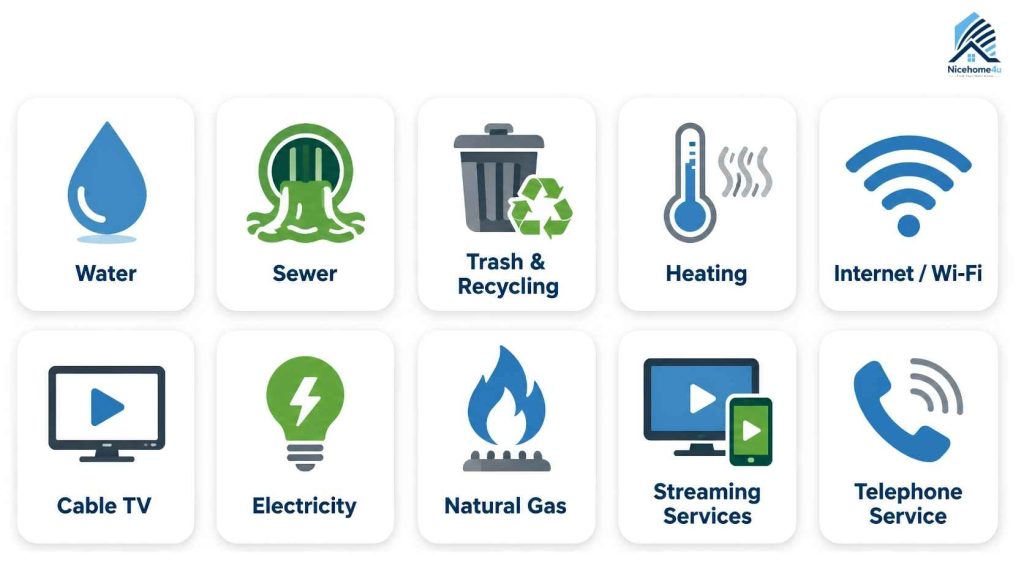
In Oklahoma City, utility responsibilities can vary depending on the type of rental property. The utilities most commonly included in rent are:
- Water
- Sewer
- Trash and recycling collection
- Heating
- Internet or Wi-Fi
- Cable television
- Electricity
- Natural gas
- Streaming services
- Telephone service
While apartments with utilities included in rent can make monthly budgeting easier, they may also have a higher rental price because the landlord factors those utility costs into the rent. Knowing exactly what’s covered helps you accurately compare different rentals and select the best option for your budget.
Pro Tip: Don’t rely solely on the rental listing. Ask for a breakdown of the included utilities and verify the information in the lease agreement before signing.
Which Utilities Are Landlords and Tenants Typically Responsible For?
Landlords usually cover utilities that are shared among multiple tenants or are tied to the property itself, regardless of occupancy. Including these services in the monthly rent simplifies property management and ensures essential utilities remain available.
Although some utilities are included in apartment rent, tenants are commonly responsible for services based on their personal consumption. Paying these bills directly gives renters more control over their expenses and motivates them to use energy more efficiently.
Landlord vs. Tenant Utility Responsibilities
Understanding who is responsible for each utility helps both landlords and tenants avoid billing disputes and unexpected expenses. While responsibilities vary by property, the table below outlines the most common arrangements.
| Utility | Usually Paid by Landlord | Usually Paid by Tenant |
|---|---|---|
| Water | Often | Sometimes |
| Sewer | Often | Sometimes |
| Trash & Recycling | Often | Sometimes |
| Electricity | Rarely | Usually |
| Natural Gas | Sometimes | Usually |
| Internet | Sometimes | Usually |
| Cable/Streaming | Rarely | Usually |
Note: This table reflects common rental practices. Always refer to the lease agreement for the exact utility responsibilities for your rental property.
Should Landlords Include Utilities in Rent?
One question landlords often ask is “Should I include utilities in rent?” The answer depends on the type of property you manage, your local rental market, and your long-term management goals.
Including utilities can make a rental more attractive, especially for apartments, furnished rentals, or properties targeting students and short-term tenants. Many renters value the simplicity of fewer bills, which makes budgeting easier and allows them to compare properties more effectively.
However, bundling utilities isn’t always ideal. When tenants don’t pay directly for usage, they may consume more, which can drive up costs for the landlord.
Benefits of Including Utilities in Rent
- Simplifies monthly budgeting for tenants.
- Makes the rental more competitive and appealing
- Reduces the number of separate bills tenants have to handle
- Streamlines billing in multi-unit properties.
- Can improve tenant satisfaction and retention.
Potential Drawbacks
- Utility costs can vary seasonally and unpredictably
- Higher consumption can lower overall rental profitability
- Monthly rent may need to increase to offset utility expenses.
- Unexpected utility price increases can affect operating costs.
Before making a decision, landlords should carefully review the property’s utility setup, historical monthly costs, and the expectations of their target renters.
How Lease Agreements Should Define Utility Responsibilities
A well-written lease agreement is one of the best ways to avoid confusion and disputes over utility payments. For additional rental guidance and educational resources, visit the U.S. Department of Housing and Urban Development (HUD). Instead of relying on verbal discussions, landlords and tenants should ensure every utility responsibility is clearly documented before the tenancy begins.
At a minimum, the lease should clearly state:
- Which utilities are included in the monthly rent.
- Which utilities the tenant is responsible for setting up and paying.
- When and how utility accounts must be transferred into the tenant’s name.
- How shared utilities will be calculated, if applicable.
- Whether there are any usage limits on included utilities.
- Who is responsible for utility charges after moving out.
Clearly written utility clauses reduce confusion and provide a reference if questions arise during the lease term. They promote transparency and ensure both parties know exactly what they’re responsible for from the beginning.
Best Practice: Review the utility section with your landlord or property manager before signing the lease. Asking questions upfront is much easier than resolving billing issues after you’ve moved in.
Tips for Tenants Before Renting a Home or Apartment
If you’re planning to rent in Oklahoma City, asking about utility responsibilities during the property tour can help you avoid unexpected costs after moving in. Comparing what is included in rent across different properties also makes it easier to estimate your true monthly housing expenses. Understanding utility responsibilities before signing a lease can save you from unexpected expenses and make budgeting much simpler.
If this is your first rental, here are some practical tips to follow before committing to a rental:
- Ask for a full breakdown of which utilities are included in the rent.
- Request an estimate of average monthly costs for the utilities you’ll be responsible for paying.
- Confirm when utility accounts should be transferred into your name.
- Carefully review the lease for any usage limits or reimbursement policies related to utilities.
- Check whether internet or cable services are available and whether installation fees apply.
- Keep copies of your move-in utility readings, if applicable.
Following these steps will give you a clearer picture of your total monthly housing costs and reduce the chance of unexpected utility bills after moving in.
Need help finding a rental with clear lease terms and transparent utility information? Explore Nicehome4u’s available rental homes to compare your options.
Conclusion
Understanding utility responsibilities is an essential part of renting or managing a property. Whether you’re searching for a home with utilities included in rent or preparing a lease for new tenants, knowing who pays for each utility helps prevent misunderstandings and makes monthly budgeting more predictable.
While water, sewer, and trash collection are frequently included in apartment rentals, services like electricity, natural gas, and internet are typically paid directly by tenants. Since every property is unique, the lease agreement should always be your main reference for determining what’s included and who is responsible for each utility.
Taking the time to review utility responsibilities before signing a lease creates a smoother rental experience for both landlords and tenants. Clear expectations, open communication, and a well-written lease can go a long way toward avoiding billing disputes and ensuring everyone understands their obligations from the start.
If you’re looking for a professionally managed rental home in Oklahoma City, Nicehome4u is here to help. We offer transparent lease terms, clear utility information, and quality rental homes throughout the Oklahoma City area. Browse our available properties or contact Nicehome4u team to find a home that fits your lifestyle, budget, and rental needs.