Understanding what is considered normal wear and tear in a rental home can help you avoid unnecessary security deposit disputes at the end of a lease. It generally includes the gradual deterioration that happens through reasonable, everyday use, such as faded paint, worn carpeting, or minor scuffs on walls. Damage caused by neglect, misuse, or accidents is a different matter and may lead to security deposit deductions.
Fortunately, the distinction isn’t based on opinion alone. According to the U.S. Department of Housing and Urban Development (HUD), landlords generally cannot deduct a tenant’s security deposit for normal wear and tear resulting from ordinary use. Understanding this difference helps both landlords and tenants make informed decisions during the move-out inspection, especially when comparing the property’s condition with the lease agreement and any move-in documentation.
In this guide, you’ll learn what qualifies as normal wear and tear, how it differs from tenant-caused damage, when landlords can charge for repairs, and practical steps you can take to reduce disputes and protect your rental property.
What Does Normal Wear and Tear Mean?
Normal wear and tear refers to the gradual changes that naturally happen when a rental home is lived in and cared for through everyday, reasonable use. Think of faded paint, worn carpet, or minor scuffs on the walls. These are signs of natural aging, not damage caused by negligence, misuse, or accidents.
Every rental home naturally shows signs of everyday living over time. That’s why landlords generally treat these minor changes as part of routine maintenance rather than tenant responsibility. We’ve found that many move-out disagreements happen simply because landlords and tenants have different expectations about what counts as normal.
The key difference is simple: normal wear and tear affects a property’s appearance through everyday living, while tenant-caused damage affects its condition or function. Understanding this distinction makes move-out inspections fairer and helps reduce disputes over security deposits.
Normal Wear and Tear vs. Tenant Damage
If you’re unsure whether you’ll be responsible for a repair, ask yourself one simple question: Did this happen through everyday use, or was it caused by negligence, misuse, or an accident? The answer usually determines whether it’s considered normal wear and tear or tenant-caused damage.
| Normal Wear and Tear | Tenant Damage |
| Faded paint from age | Large holes in walls |
| Worn carpet from regular foot traffic | Burn stains or torn carpet |
| Minor scuffs on walls | Broken doors or windows |
| Loose door handles or hinges | Missing or damaged fixtures |
| Faded blinds from sunlight | Broken blinds caused by misuse |
| Minor surface scratches on flooring | Deep gouges or water damage |
It really comes down to one thing: natural aging versus preventable damage. Everyday use naturally leaves small signs of wear, while tenant-caused damage affects the property’s condition, function, or value. We’ve seen many security deposit disputes come down to one thing: missing documentation. Move-in photos, a signed condition report, and a thorough move-out inspection help both landlords and tenants determine what’s ordinary wear and what’s beyond it.
List of Normal Wear and Tear for Renters
If you’re getting ready to move out, you might be wondering whether every mark or scratch will cost you part of your security deposit. The good news is that not every imperfection is considered damage. Most rental homes naturally show signs of everyday living, and many of those changes are considered normal wear and tear rather than tenant-caused damage.
Many move-out disputes happen because landlords and tenants don’t always have the same expectations. Understanding what usually counts as ordinary wear can help you avoid surprises and make the move-out inspection much smoother.
Here are some of the most common examples of normal wear and tear that landlords and tenants typically see during a move-out inspection.
Walls, Paint, and Ceilings
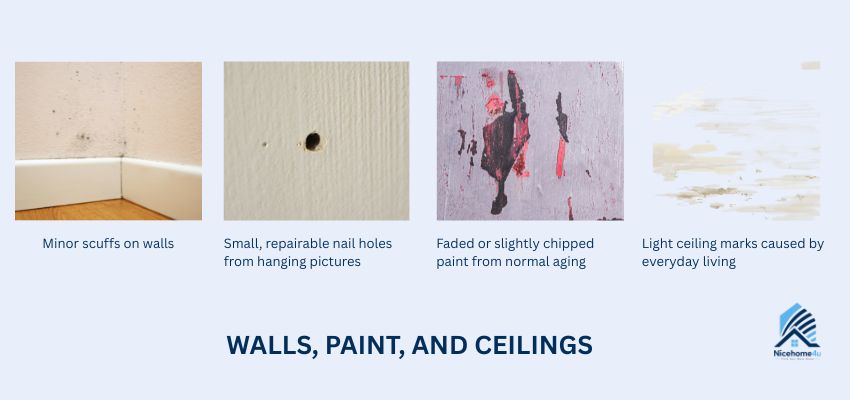
It’s normal for walls and ceilings to show a little age after someone has lived in a home. Landlords generally expect to see:
- Minor scuffs on walls
- Small, repairable nail holes from hanging pictures
- Faded or slightly chipped paint from normal aging
- Light ceiling marks caused by everyday living
These are usually cosmetic issues that become part of routine maintenance rather than tenant responsibility.
Flooring and Carpet
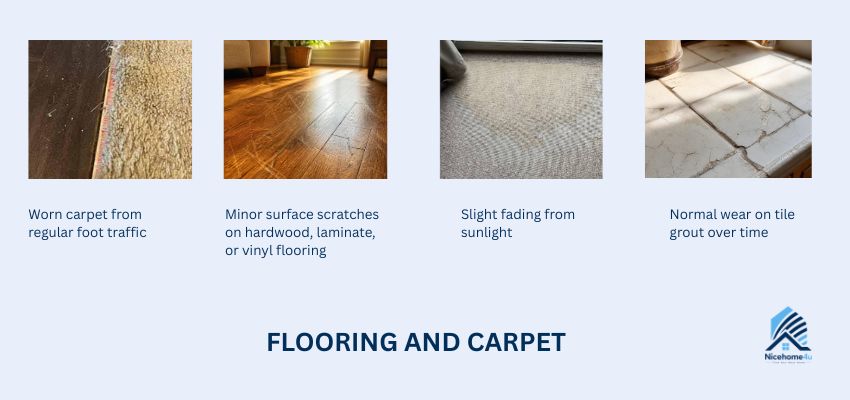
Flooring is one of the first areas to show regular wear and tear, especially in busy parts of the home. Common examples include:
- Worn carpet from regular foot traffic
- Minor surface scratches on hardwood, laminate, or vinyl flooring
- Slight fading from sunlight
- Normal wear on tile grout over time
However, deep gouges, large stains, or torn carpet typically go beyond normal wear and tear and may require repairs.
Doors, Windows, and Fixtures

Doors, windows, and fixtures are used every day, so some wear is expected during a tenancy. You may notice:
- Loose door handles or hinges
- Faded blinds or curtains from sun exposure
- Minor wear on locks from everyday use
- Slight wear on cabinet handles and other hardware
These changes are commonly associated with reasonable use and don’t usually indicate negligence.
Appliances and Plumbing Fixtures

Appliances and plumbing fixtures also age with normal use. It’s easy to worry about older faucets or appliances during a move-out inspection, even when the changes are simply part of the home’s expected deterioration. Common examples include:
- Minor wear on appliance finishes
- Aging faucet seals or washers
- Slight wear on sink fixtures
- Reduced efficiency caused by age rather than misuse
Regular maintenance helps extend the life of these items, but natural aging is generally different from tenant-caused damage.
Can a Landlord Charge You for Normal Wear and Tear?
In most cases, no. Landlords generally can’t charge tenants for normal wear and tear because it’s a normal part of owning and maintaining a rental property. However, they may deduct money from a security deposit if the damage goes beyond ordinary wear or violates the terms of the lease agreement.
For rental homes in Oklahoma, the Oklahoma Residential Landlord and Tenant Act outlines the rules for security deposits and landlord-tenant responsibilities. You should also understand your rights and responsibilities as a tenant before moving out. If you’re unsure about a deduction, review your lease agreement, compare the property’s condition with your move-in photos or condition report, and ask for an itemized explanation. Clear documentation often makes it much easier to resolve questions before they turn into costly disputes.
How to Avoid Security Deposit Disputes
No one wants to lose part of their security deposit over a misunderstanding. The good news is that a little preparation before move-in and move-out can make a big difference. We’ve found that most disputes happen because neither side has enough documentation to show the property’s original condition.
Here are a few simple steps that can help protect both landlords and tenants:
- Take dated photos before moving in and after moving out to document the property’s condition.
- Complete a move-in walkthrough checklist and review our Resident Move-Out Checklist to understand what landlords typically inspect before returning a security deposit.
- Report maintenance issues promptly so small problems don’t become bigger repairs.
- Keep receipts and maintenance records if you’ve paid for approved repairs during your tenancy.
- Review your lease agreement before moving out so you understand your responsibilities for cleaning, maintenance, and repairs.
Taking a few extra minutes to document the property’s condition today can save a lot of frustration later. If questions come up during the move-out inspection, clear documentation makes it much easier to determine whether an issue is normal wear and tear or damage that requires repairs.
Conclusion
Understanding what is considered normal wear and tear in a rental home helps landlords and tenants set realistic expectations from the beginning of a lease. While everyday use naturally changes the condition of a rental home, knowing the difference between normal wear and tear and tenant-caused damage can help prevent unnecessary disputes, protect security deposits, and make move-out inspections much smoother.
Clear communication and good documentation are often the best ways to avoid misunderstandings. A detailed lease agreement, move-in photos, and a thorough condition report give both landlords and tenants a shared understanding of the property’s condition before any questions arise.
If you’re looking for professional property management in Oklahoma City, Nicehome4u can help you simplify inspections, protect your investment, and create a better rental experience for both landlords and tenants. Whether you need help managing a single rental home or an entire portfolio, Nicehome4u is here to help. Contact our team today to simplify inspections, reduce disputes, and protect your investment.