
If you need to add someone to a lease, whether it’s a roommate, spouse, partner, or family member, you can’t simply move them in. Most landlords require approval before an additional tenant wants to move in. To update the existing lease agreement, you’ll need a lease addendum or lease amendment in many cases.
Your existing lease agreement is a binding contract between you and your landlord. I’ve seen many tenants assume that verbal permission is enough, only to discover later that an unauthorized occupant violated the rental agreement. When a routine inspection turned up an unlisted resident, and the landlord treated it as a lease violation rather than a simple oversight. If you follow the right steps and communicate openly with your landlord, a tenant can definitely add someone as a roommate. If you’re renting in Oklahoma City, it’s also important to understand that landlords may have specific lease policies alongside Oklahoma landlord-tenant laws.
From my experience, one of the biggest mistakes tenants make is assuming that verbal permission is enough. Unfortunately, that misunderstanding can lead to lease violations, disputes, or unexpected problems later. Taking the time to update your existing lease agreement protects everyone involved and clearly defines each tenant’s responsibilities.
In this guide, you’ll learn how to add someone to a lease, whether you can add someone to your lease after signing, when landlord approval is required, what documents you’ll need, and how to avoid common mistakes. This guide will help you make the change legally if you’re moving in with a roommate or welcoming a family member.
Key Takeaways
Before adding someone to your lease, remember these important points:
- Always obtain landlord approval before another person moves in.
- The legal document you need is called a lease addendum or lease amendment.
- The new person will almost always go through tenant screening, such as a background check and credit check.
- Every tenant added to the lease becomes legally responsible for following the lease terms.
- Rules vary by state and landlord, so review your lease carefully before making changes.
Why You Might Need to Update Your Lease
There are many reasons you must update your lease during your tenancy. You might be sharing rent with a roommate to reduce your monthly expenses. Maybe your spouse recently accepted a job in Oklahoma City, or a family member is relocating to nearby communities such as Edmond, Moore, or Yukon and needs temporary housing while searching for a permanent home.
It seems so much easier to simply let someone move in, but it may create unnecessary complications if you don’t update your lease. Your lease may contain rules like who is allowed to live in the property and how long guests may stay. The landlord may consider them an unauthorized occupant if someone lives beyond the allowed guest period.
Updating your lease means you’re following the rules and protecting everyone who is involved. Adding someone to the lease helps everyone understand who will pay for rent, maintain the property, and follow the lease terms. If any circumstances change later, it might reduce the risk of disagreements.
Common Reasons to Add Someone to a Lease
- A roommate wants to share rent and utility costs.
- Your spouse or partner is moving into the property.
- An adult child is returning home.
- A parent or sibling needs long-term accommodation.
- You want another person to share legal responsibility for the lease.
- Your landlord requires every adult occupant to be listed on the lease.
Whatever the reason, you must take the proper steps to save you from unnecessary problems later. In a growing rental market like Oklahoma City, it’s common for roommates, family members, or partners to move into an existing rental during the lease term. Regardless of the reason, most professional property managers will require the new resident to be approved before updating the lease.
Who Can Be Added to an Existing Lease?
Many renters get confused while adding someone to an existing lease. That’s why we are here to solve this confusion. Although not everyone who stays in your rental needs to be listed on the lease. The major thing you need to know is how long they’ll be living there and whether they’ll share responsibility for the rental.
For example, a friend visiting for a weekend typically doesn’t need to be added to the lease. However, if that same friend plans to live in the property full-time and contribute toward rent, your landlord will likely require them to become an additional tenant or an authorized occupant.
It is very important to know the difference between guests, occupants, and tenants because each has different legal rights and responsibilities. Review your lease carefully and communicate with your landlord before you invite someone.
In the following table, you can get a clear overview of who usually needs to be added.
| Occupant | Usually Added to the Lease? | Why? |
| Roommate | Yes | Shares rent and lives in the property full-time. |
| Spouse | Usually | Many landlords require all adult occupants to be listed. |
| Domestic Partner | Usually | Considered a long-term resident. |
| Adult Family Member | Often | Especially if staying for several months. |
| Adult child | Sometimes | Depends on lease terms and occupancy rules. |
| Long-Term Friend | Usually | If living there permanently. |
| Temporary Guest | No | Guest policies generally apply instead. |
Another major difference you must know: Tenant vs. Authorized Occupant.
A tenant signs the lease and is responsible for paying rent and follows every condition in the rental agreement. Tenants may share responsibility if the rent isn’t paid and can be held liable for property damages. The tenant has the right to renew the lease independently.
An authorized occupant has permission to live in the property but usually doesn’t sign the lease or take on the same legal obligations. It has limited liability for property damages. An authorized occupant doesn’t have the right to renew the lease independently. Landlords use this option for family members or temporary guests who won’t be financially responsible for the lease.
Before someone moves in, always ask the landlord which status applies because every landlord has different policies. If you’re still unsure whether someone should be listed as a tenant or an occupant, read our detailed comparison to understand the legal differences before updating your lease.
When Do You Need Landlord Approval?
One of the most common questions renters ask is, “Can I add someone to my lease without telling my landlord?”
In most cases, the answer is no. The landlord has the right to decide who lives there and to comply with applicable housing and anti-discrimination laws. Before another adult moves in permanently, tenants need to obtain approval from the landlord. For example, many landlords and property management companies throughout Oklahoma City require every adult occupant to complete an application and screening process before being added to the lease. Checking your rental agreement and discussing the request with your landlord early can help avoid delays.
However, from a landlord’s perspective, it’s an important part of protecting the property and ensuring every tenant can meet the lease requirements. Approving a new resident is all about confirming that the person is financially and legally qualified to live in the rental.
Most landlords review several factors before approving a request, including:
- Employment and income
- Rental history
- Credit history
- Criminal background (where permitted by law)
- Occupancy limits
- Ability to comply with the lease terms
The landlord will usually prepare the necessary paperwork to update the lease if the new resident meets all these requirements.
Pro Tip: Never assume that verbal approval is enough. Always ask for written consent before another adult moves into the property. Having everything documented protects both you and your landlord if questions arise later.
What Happens During the Approval Process?
Although every landlord follows a slightly different process, most approvals involve the same basic steps:
- Submit a request to your landlord or property manager.
- Complete a rental application for the new resident.
- Provide proof of income and identification.
- Complete any required background or credit checks.
- Review and sign the updated lease documents.
- Keep a signed copy for your records.
Following these steps can make you responsible and help the approval process move more smoothly.
Can You Add Someone After Signing the Lease?
This is where most confusion starts. Most tenants ask this question: “Can you add someone to a lease after signing?” The good news is that yes, in many cases you can. Signing a lease doesn’t always mean the list of tenants is permanently locked in. Life changes, and landlords understand that situations such as marriage, a new roommate, or a family emergency can happen during a lease term.
However, adding another person isn’t as simple as writing their name on the lease. If you signed a lease, then it becomes a legally binding agreement. Any changes you want to make, you need approval from your landlord with written documentation. It depends on the landlord’s policy, and they may prepare a lease addendum or a lease amendment to officially update the agreement.
One situation I’ve seen more than once is tenants allowing someone to move in first and planning to “sort out the paperwork later.” While it might seem harmless, this can create unnecessary problems if the landlord discovers an unauthorized occupant during a routine inspection or maintenance visit. It’s always better to complete the approval process before the new person moves in.
Ask these few questions yourself before you move someone in:
- Will this person be living in the property full-time?
- Will they contribute to rent or utilities?
- Does my lease require all adult occupants to be listed?
- Have I informed my landlord or property manager?
If you felt “yes” to most of these questions, it’s time to discuss updating your lease with your landlord.
Quick Tip: Even if the new resident is your spouse or an adult family member, don’t assume they’re automatically covered by your lease. Always review your rental agreement and confirm the requirements with your landlord.
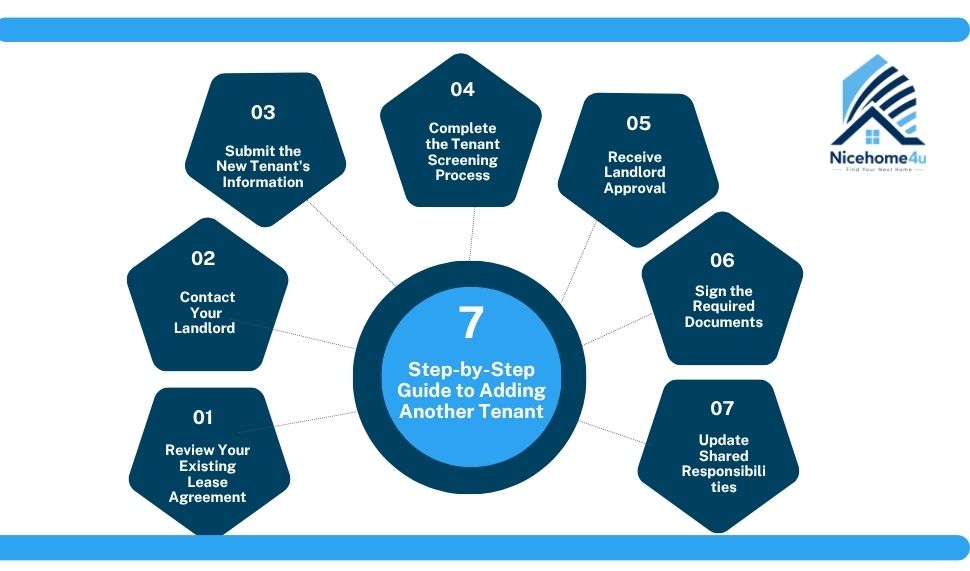
Step-by-Step Guide to Adding Another Tenant
Here’s exactly how I’d walk you through this process if you asked me directly.
Although every landlord has slightly different requirements, the steps below are common in most rental situations. Following them in order can save time and improve your chances of getting approval without unnecessary delays.
Step 1: Review Your Existing Lease Agreement
Before you do anything else, reread your existing lease agreement. Many leases already explain how to request changes, who can live in the property, and whether there are limits on the number of occupants.
Be sure to pay close attention to every section that covers:
- Occupancy limits
- Guest policies
- Lease modifications
- Approval requirements
- Additional tenant clauses
To prevent misunderstanding later, you must know what’s already written in your lease.
Step 2: Contact Your Landlord or Property Manager
Don’t skip this. Once you’ve reviewed your lease, contact your landlord or property manager as early as possible. Explain why you want to update the lease and who will be moving in. If you’re renting through a professional property management company in Oklahoma City, they may also provide specific forms or online portals for requesting lease modifications. Starting the process early gives enough time for screening and document preparation.
For example, you might be adding:
- A roommate to help split rent.
- Your spouse after getting married.
- A parent or sibling who needs temporary housing.
- An adult child returning home.
Being honest about the situation builds trust and often leads to a smoother approval process.
Pro Tip: Don’t wait until moving day to notify your landlord. Early communication gives everyone enough time to complete the paperwork and avoids unnecessary stress.
Step 3: Submit the New Tenant’s Information
Most landlords will require the new occupant to complete a standard rental application. This information often includes:
- Government-issued identification
- Current employment details
- Proof of income
- Previous rental history
- Personal references
From the beginning, if you provide complete and accurate information, it can help avoid delays caused by missing documents.
Step 4: Complete the Tenant Screening Process
Many landlords treat a new resident the same way they would a new applicant. That means they may require tenant screening before approving the request.
The screening process often includes:
- A background check
- A credit check
- Employment verification
- Rental history review
- Income verification
Don’t view this as a sign that your landlord doesn’t trust you. Instead, think of it as part of their standard process for protecting the property and ensuring every tenant can meet the lease obligations.
Step 5: Receive Landlord Approval
Once the screening process is complete, your landlord will review the application and decide whether to approve the request.
Approval often depends on factors such as:
- The applicant’s income
- Credit history
- Rental references
- Occupancy limits
- Compliance with the property’s rental policies
If everything checks out, your landlord will normally prepare the documents needed to update the lease.
Remember, approval isn’t automatic. That’s why it’s important to follow the process instead of assuming another person can simply move in.
Step 6: Sign the Required Documents
After receiving approval, your landlord will usually prepare a legal document to record the change.
This may be:
- Lease addendum
- Lease amendment
- Updated rental agreement
Every current tenant, the new tenant, and the landlord should sign the document before the new resident officially moves in.
Once signed, keep a copy with your lease records. Having written documentation protects everyone if questions arise later about who is responsible for rent, damages, or other lease obligations.
Step 7: Update Shared Responsibilities
Adding another tenant isn’t only about paperwork. It’s also a good time to discuss how responsibilities will be shared.
Before moving in, make sure everyone agrees on:
- Rent payments
- Utility bills
- Cleaning responsibilities
- Household rules
- Parking arrangements
- Reporting maintenance issues
Having these conversations early can prevent disagreements later and help everyone enjoy a more positive living experience.
Quick Checklist: Before You Add Someone to Your Lease
Use this checklist to make sure you’ve completed every important step before another person moves into your rental.
- Reviewed the existing lease agreement for relevant clauses
- Contacted landlord or property manager for initial approval
- New tenant submitted a rental application
- Background check and credit check completed
- Written landlord approval received
- Addendum or amendment drafted
- Tenant designation decided (co-tenant vs. authorized occupant)
- Security deposit terms confirmed
- All parties signed the document
- Copies distributed and stored safely
Documents You May Need to Submit
Before submitting your request, make sure you gather all the required paperwork, which helps you to avoid delays. While requirements vary by landlord, most will ask for similar documents to verify the new tenant’s identity and financial stability.
Here’s what you should have ready:
| Document | Why It’s Needed |
| Government-issued ID | Confirms the tenant’s identity. |
| Rental application | Provides personal and employment information. |
| Proof of income | Shows the tenant can help meet rent obligations. |
| Employment verification | Confirms current employment status. |
| Consent for a background check | Allows the landlord to review rental and criminal history, where permitted by law. |
| Consent for a credit check | Helps evaluate financial responsibility. |
| Existing lease agreement | Used to prepare the updated documents. |
| Lease addendum or lease amendment | Officially records the addition of the new tenant. |
Quick Note: Some landlords may also require an adjustment to the security deposit or ask the new tenant to contribute toward it. Review the updated agreement carefully so everyone understands their financial responsibilities before signing.
Lease Addendum vs. Lease Amendment: What’s the Difference?
If you’re updating your lease for the first time, you may come across the terms lease addendum and lease amendment. They sound similar, and many people use them interchangeably, but they aren’t always the same.
The good news is that you don’t need to be a legal expert to understand the difference. Knowing which document your landlord is using simply helps you understand what is changing in your lease and why.
Here’s the difference between a lease addendum and a lease amendment:
| Lease Addendum | Lease Amendment |
| Adds new information to the existing lease | Changes existing terms of the lease |
| Commonly used to add another tenant | Often used to modify existing lease conditions |
| Attached to the original lease | Updates part of the original agreement |
| Doesn’t replace the lease | Changes specific clauses within the lease |
The exact document your landlord chooses depends on their policies and local laws, so don’t hesitate to ask questions before signing. While the terminology is similar across the country, landlords and property managers in Oklahoma City typically use whichever document best fits their leasing process. If you’re unsure which document applies to your rental, ask your landlord before signing any updated paperwork.
Quick Tip: If your goal is to add a tenant to the lease, many landlords use an addendum to the lease agreement rather than creating a completely new lease. Always review the document carefully so you understand what you’re signing.
When Can a Landlord Deny Your Request?
If you’re wondering, “Can a landlord refuse to add someone to a lease?” Absolutely yes, but it’s only for legitimate reasons.
Most landlords are happy to consider reasonable requests, but approving another tenant also means accepting additional financial and legal risk. Because of that, they’ll usually review the new resident just as carefully as they would any new applicant.
In many cases, the request is denied because the applicant doesn’t meet the property’s rental requirements. A denial doesn’t necessarily mean your landlord is being difficult.
Common Reasons a Landlord May Decline the Request
1. The Applicant Doesn’t Meet Income Requirements
Many landlords require tenants to earn a minimum amount of income before approving a lease. If the new resident can’t demonstrate sufficient income, the request may be denied.
2. The Background or Credit Check Raises Concerns
The landlord may be concerned about a background check or credit check that may reveal issues such as unpaid debts, a history of missed rent payments, or prior lease violations. In this case, the landlord may ask for additional documentation or another qualified tenant.
3. Occupancy Limits Have Been Reached
Based on local housing codes and the property’s size, every rental property has a maximum number of occupants. The landlord may not be legally allowed to approve the request if adding another person would exceed the occupancy limits.
4. Incomplete Applications
Believe it or not, one of the most common reasons for delays or denials is missing paperwork. Incomplete applications, missing proof of income, or unsigned forms can all slow the approval process.
Important: Landlords must also follow applicable fair housing and anti-discrimination laws. Decisions should be based on lawful screening criteria and lease requirements—not on protected characteristics.
Common Mistakes People Make When Adding a Tenant
Adding another tenant may seem straightforward, but small mistakes can create unnecessary stress or even put your tenancy at risk.
I’ve watched people make the same handful of errors over and over, so let’s cover them here so you don’t repeat them.
1. Letting Someone Move In Before Approval
You may trust the person moving in, but your landlord still has the right to approve who lives in the property.
Moving someone in before receiving written approval could violate your lease and make future negotiations much more difficult.
2. Assuming Verbal Permission Is Enough
A quick conversation with your landlord is helpful, but verbal approval can easily be misunderstood. Always ask for written consent and keep a copy of any updated lease documents.
3. Not Reading the Updated Agreement
Many tenants sign documents without reading them carefully.
Before signing, review the updated agreement:
- Rent responsibilities
- Utility payments
- Parking rules
- Pet policies
- Maintenance responsibilities
- Move-out requirements
If something isn’t clear, ask your landlord to explain it.
4. Forgetting to Discuss Financial Responsibilities
Adding another tenant doesn’t automatically mean everyone understands who pays for what.
Before anyone moves in, discuss:
- Monthly rent
- Utilities
- Internet
- Household supplies
- Security deposit responsibilities
- Damage costs
Clear expectations today can prevent disagreements later.
5. Waiting Until the Last Minute
I’ve seen tenants contact their landlord only a day or two before someone is scheduled to move in. Unfortunately, approvals often take several days because landlords may need to review applications, complete screening, and prepare updated documents.
Planning makes the entire experience much less stressful.
Final Thoughts
Adding another person to your lease doesn’t have to be stressful. Whether you’re welcoming a roommate, your spouse, or a family member, the most important step is to communicate with your landlord before anyone moves in.
Skipping steps might feel faster in the moment, but it almost always creates bigger problems later, whether that’s a lease violation, a security deposit dispute, or an awkward conversation during a property inspection. Do it right the first time, and you’ll protect yourself, your roommate or family member, and your relationship with your landlord.
While every rental property has its own policies, the overall process is usually straightforward. Review your lease, discuss your plans with your landlord, complete any required screening, and sign the appropriate paperwork. Taking these steps helps protect everyone involved and keeps your tenancy on solid ground. If this is your first rental experience, our First-Time Renter’s Guide covers everything from choosing a property to understanding your lease and avoiding common mistakes.
If you’re renting in Oklahoma City, following your landlord’s approval process and understanding your lease requirements can help you avoid unnecessary disputes while ensuring everyone living in the property is properly documented. If you’re unsure about any part of the process, don’t guess. A quick conversation with your landlord or property manager today can save you from misunderstandings and potential lease issues later.
Need Help Managing Your Rental Property?
Whether you’re updating a lease, screening new tenants, or navigating landlord-tenant questions, having the right guidance can make the process much easier.
At Nicehome4u, we help property owners and tenants understand lease requirements, maintain compliant rental practices, and create smoother rental experiences. If you need assistance with lease updates or professional property management services, our team is here to help.
Contact Nicehome4u today to learn how we can simplify lease management and help protect your rental investment.