You live with someone. Maybe it’s your partner, your child, a roommate, or a parent who moved in to help with childcare. Or maybe you’re the one who moved into someone else’s place.
Everyone gets along. Rent gets paid. Life is good. But then something shifts.
A disagreement happens. Someone stops paying their share. The landlord shows up asking questions. Or worst of all, someone needs to leave, but refuses.
Suddenly, you realize you have no idea who has what rights. Can the landlord talk directly to your roommate? Can your partner be evicted if you break up? Does your adult child living in your basement have any legal protection?
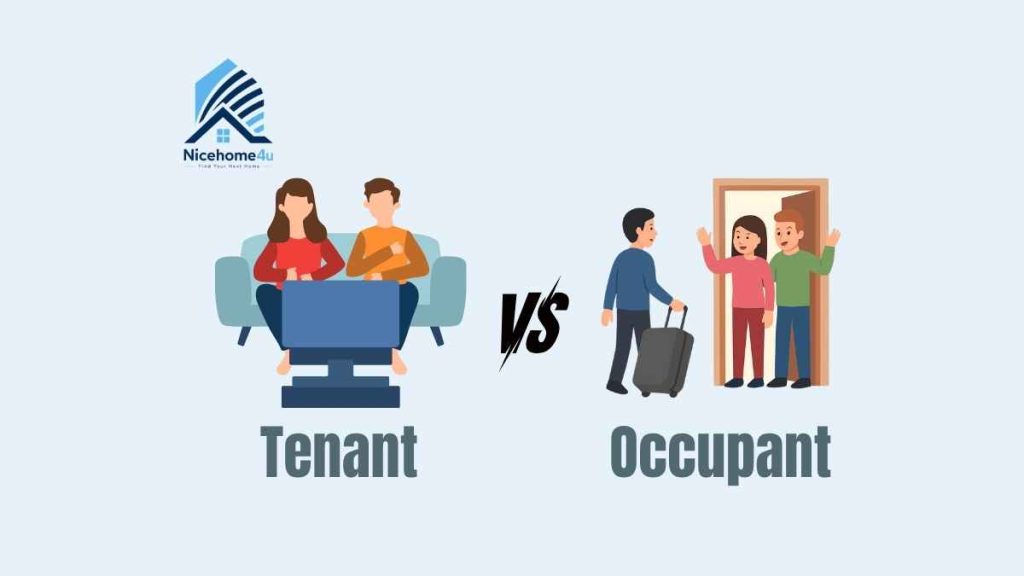
These questions all come down to two simple words: tenant and occupant. Most people use these terms interchangeably. They shouldn’t. The difference matters, a lot.
A tenant signs a lease. They have legal rights, financial responsibilities, and protections under the law.
An occupant lives in the home with permission. But they have no direct agreement with the landlord. Their right to stay is tied entirely to the tenant.
This distinction affects:
- Who is legally responsible for paying rent
- Who can be asked to leave, and how
- Who can request repairs from the landlord
- Who gets protection from eviction
- Who is on the hook when something gets damaged
Whether you are a tenant, an occupant, or someone who lives with either, understanding these roles protects you. It prevents nasty surprises. And it helps everyone under the same roof know exactly where they stand.
This guide breaks down everything you need to know about tenants versus occupants. No legal jargon. No bias toward landlords or renters. Just clear, useful information for anyone sharing a home.
Let’s dive in.
What Is a Tenant?
A tenant is a lease signatory who is legally responsible for paying rent and adhering to the contract, granting them full legal protections. A tenant is legally responsible for the maintenance of the rental property throughout the term of the lease. They agree to pay rent, follow the landlord’s rules, and maintain the property according to the lease terms. They also undergo tenant screening, pay security deposits, and communicate directly with the landlord about repairs, renewals, or any issues that arise during their tenancy.
Because tenants are legally bound by the lease, they have certain rights and protections under state and local landlord-tenant laws. This includes the right to a habitable living space and protection from unlawful eviction, as well as the obligation to pay rent on time and respect the property. If the lease is broken, such as by failing to pay rent or causing significant damage, the landlord’s legal recourse is against the named tenants, not anyone else living in the unit.
What Is an Occupant?
An occupant resides in the property with permission but lacks a direct financial or legal agreement with the landlord. An occupant is someone who lives in the rental property with the tenant’s permission but does not have a direct agreement with the landlord. Occupants may include family members, children, partners, roommates, or even long-term guests.
There is also a difference between authorized and unauthorized occupants:
- Authorized occupants are those who the landlord has given written permission to reside in the property, even though they have not signed the lease and are not legally responsible for paying rent or complying with the lease’s terms.
- Unauthorized occupants are individuals who have taken up residence in the unit without the landlord’s knowledge or approval, such as a friend who moves in without permission, or an unapproved subtenant.
Who Needs to Be on the Lease?
1. All Financially Responsible Adults
Anyone aged 18 or older who will be paying rent, splitting the financial responsibilities, or whose income is required to qualify for the property should be listed as a co-tenant. This ensures the landlord can legally hold all earning parties accountable for rent and damages.
2. All Co-Signing Roommates
If two or more unrelated adults are moving in together, both should sign the lease as co-tenants. This grants both roommates equal legal rights and makes both entirely responsible for the rent (a concept known as “joint and several liability”).
3. Minor Children
Dependents under the age of 18 are automatically listed as authorized occupants rather than tenants because they cannot legally sign a binding contract. Their names are still listed on the lease so the landlord has a record of everyone living in the unit.
Who Can Simply Be an Occupant?
1. Minor Children
Children and dependents are always legally classified as occupants.
2. Spouses and Family Members
In some jurisdictions, spouses and immediate family members may be classified as authorized occupants rather than tenants, especially if they are not contributing to the qualifying income. However, landlords still require them to be vetted and listed on the lease for safety and occupancy limits.
3. Long-Term Partners or Caregivers
If a partner moves in or a live-in care assistant is needed, they are usually categorized as authorized occupants. The original tenant retains the legal and financial responsibility for the lease, while the occupant is permitted to reside there with the landlord’s written approval.
Key Differences: Tenant vs. Occupant (Comparison Table)
| Feature | Tenant | Occupant |
| Signs the Lease | Yes | No |
| Legally Liable for Rent | Yes | No (pays the tenant, not the landlord) |
| Rights & Protections | Full legal rights (habitable space, due process for eviction) | Limited rights (right to stay is tied to the tenant’s lease) |
| Request Maintenance/Repairs | Yes | No |
| Can Be Removed by Landlord | Only through formal eviction | Can be asked to leave if the tenant’s lease ends or is violated |
Tenant Rights and Responsibilities
Rights:
- Right to Occupy: The legal right to live in the property for the full lease term. A landlord cannot just decide to remove a tenant; they must follow formal eviction procedures.
- Privacy Rights: Tenants have a right to privacy in their home, and landlords must provide proper notice, typically 24 to 48 hours, depending on state law, before entering, except in emergencies.
- Repairs and Ongoing Maintenance: Tenants have the legal right to a safe, habitable home, which means landlords must ensure the property meets basic health and safety standards and make necessary repairs.
- Legal Protections Under Landlord-Tenant Laws: Protection against unlawful eviction, the right to a habitable living space, and safeguards against discrimination.
- Eviction Process Required for Removal: If a tenant violates the lease, the landlord must follow a formal legal eviction process involving written notice, filing in court, and obtaining a legal order.
Responsibilities:
- Contractual Relationship: Tenants are generally required to enter into a legally binding contract with the landlord.
- Financial Responsibility for Rent: Tenants are required to pay rent on time and are financially liable for all charges specified in the lease, including utilities and any damages.
- Payment of Rent: Anyone listed on the lease is responsible for the full amount, even if a roommate doesn’t pay their share.
- Repairs and Maintenance: Tenants must report problems promptly, provide access for repairs, and handle routine upkeep such as replacing light bulbs or mowing the lawn if required by the lease.
Occupant Rights and Responsibilities
Rights:
- May stay in the rental with tenant and landlord approval.
- Can gain full tenant rights if formally added to the lease.
Responsibilities:
- Must follow all lease rules (pets, smoking, noise, etc.).
- Treat the property with care; damage is charged to the tenant.
- Cooperate with the tenant, who is legally responsible under the lease.
- Respect household expectations set by the tenant.
Key Limitations:
- No contractual relationship with the landlord.
- Not directly financially responsible for rent or other charges, unless otherwise specified in the lease.
- Less legal protection than tenants: Not covered by most landlord-tenant laws and do not have the same protections against issues like eviction or discrimination.
- Eviction process is not required for removal: Since occupants are not tenants, landlords are generally not required to follow the formal eviction process to remove them. The process is typically more straightforward, though local laws may vary.
Authorized vs. Unauthorized Occupants
Authorized Occupants
Individuals who have received explicit permission from the landlord or property owner to live in a rental unit. The lease may or may not list them, but their presence is documented and approved by the landlord.
Common examples:
- A tenant requests approval for a spouse, partner, or family member to move in.
- Once approved, that person becomes an authorized occupant.
Important note: Most landlords require occupants over the age of 18 to sign the lease, which makes them tenants rather than occupants. Authorized occupants who are not financially and legally liable are typically limited to dependents.
Unauthorized Occupants
Individuals living or staying in a property without the owner’s or landlord’s permission.
Examples include:
- Roommates without landlord approval: A tenant brings in a friend or partner to live in the rental without notifying the landlord, asking permission, or adding them to the lease.
- Long-term guests: If a guest stays past the lease’s “guest limit” (often 14 days) without being added to the lease, they become an unauthorized occupant.
- Subtenants: The tenant rents out part or all of the unit to another person without the landlord’s knowledge or consent.
- Family members: An adult child, sibling, or relative moves in permanently without approval or signing onto the lease.
- Holdover residents: A once-authorized tenant remains in the property after the lease expires without signing a new lease.
- Squatters: Someone living in a property who never had the owner’s permission or a lease.
Legal implication: Unauthorized occupants can be difficult to remove. Landlords generally must address the issue through the tenant and, if unresolved, pursue formal eviction proceedings. Local laws vary, and long-term residency may grant the occupant limited rights in some cases.
Can a Tenant Kick Out an Occupant?
In most cases, tenants cannot unilaterally remove an occupant from a rental property, especially if the occupant is an authorized resident listed in the lease agreement.
- When an occupant is named and approved in the lease agreement, the tenant does not have the legal right to force that person to leave on their own. Any changes to the list of authorized occupants typically require the landlord’s written consent.
- If an occupant is living in the unit without the landlord’s approval (an unapproved roommate or long-term guest), the tenant is still not empowered to evict the person themselves. The landlord must be notified, and it is up to the landlord to take appropriate action.
- If a conflict arises, tenants should communicate with their landlord or property manager, who can help mediate or address lease violations.
- Important: Tenants should never try “self-help” methods like locking a person out or putting their belongings outside. This can be unsafe and may lead to serious legal consequences if the individual is later considered a tenant.
- Exception: A tenant cannot evict a minor occupant.
If an occupant refuses to leave and the situation cannot be resolved, the landlord’s best solution may be to evict everyone living in the rental. Terminating the lease will force the tenant and all occupants to vacate the property.
Do All Occupants Need to Be Listed on the Lease?
While not every landlord requires all occupants to be listed on the lease, it is best practice to document every person who will be living in the rental property, even if they are not signing as tenants.
Why it matters:
- Helps set clear expectations and prevent disputes.
- Most lease agreements have a dedicated section where tenants can identify authorized occupants (children, partners, family members).
- Allows landlords to enforce occupancy limits and ensure compliance with local housing laws.
- If the lease specifies that only listed individuals may reside in the unit, it gives the landlord grounds to address unauthorized residents.
Yes! The lease lists all adult tenants on the lease, while minor children or other dependents are listed as occupants. This ensures the landlord complies with occupancy standards and knows exactly who resides in the home, especially important in case of emergencies.
When Does an Occupant Become a Tenant?
An occupant becomes a tenant when:
- They are added to the lease agreement as a responsible party.
- They are granted tenant rights and responsibilities.
- This typically involves signing the lease, undergoing necessary screening, and agreeing to abide by all terms set by the landlord.
Important caveat: In some cases, if an occupant has lived at the property for an extended period, pays rent directly, or is otherwise acting as a tenant, a court or local housing authority may determine that person has established “tenant” status, even without a signed lease.
Best practice: If a landlord wishes to add an occupant as a tenant, create an updated lease or lease addendum that clearly defines their new role and responsibilities. The occupant must go through the full application and approval process, including screening, background checks, criminal checks, employment, and income checks.
How to Spot a Good Lease: Tenants and Occupants
A well-written lease protects everyone under the same roof. Before signing, a tenant should look for clear language that distinguishes between tenants and occupants. This prevents confusion and legal trouble down the road.
What a Tenant Should Look for in a Lease
A section for “Authorized Occupants.” The lease should provide a place where the tenant can list every person who will live in the rental, not just those signing the lease. This includes children, a partner, or a family member.
Clear responsibility for rent and rules. The lease should specify that only those listed as tenants are legally responsible for rent and lease compliance. Occupants are not financially obligated to the landlord.
A process for adding occupants later. Life changes. The lease should outline how a tenant requests approval for additional occupants during the tenancy. A simple phone call or written notice should be the standard.
Occupancy limits. The lease should clearly state the maximum number of occupants allowed, based on local laws or landlord policy. This prevents overcrowding and keeps the tenant compliant.
Consequences for unauthorized occupants. The lease should address what happens if an unauthorized person moves in. Typical consequences include lease violations, fines, or even grounds for termination. A tenant needs to know the risk before letting a friend crash long-term.
The approval process for occupants. A strong lease defines the specific steps a tenant must take to get landlord approval for an occupant. This might include a background check, application fee, or written consent.
A time limit for guests. The lease should specify the maximum time an occupant (or guest) can reside with the tenant before needing formal approval. This is often 14 consecutive days or 30 total days per year.
Tenant responsibility for occupant behavior. The lease should include a notice that the tenant is responsible for all occupants complying with lease rules and terms. If an occupant breaks a rule, the tenant faces the consequences.
A path from occupant to tenant. The lease should outline steps for an occupant to become a tenant. This typically involves a full application, screening, credit check, and signing a lease addendum or new agreement.
Sample Guest Policy Language (Common in Leases)
Many leases include a guest policy that looks something like this:
*”Guests may not remain in the rental for more than 14 consecutive days or 30 total days in a year without written landlord approval. Tenants may have guests on the premises for up to 14 consecutive days or 30 days total in any 12-month period without prior written consent from the landlord. Any guest who stays longer than this period will be considered an unauthorized occupant and must either vacate the property or be formally added to the lease (subject to landlord approval and screening). Tenants are responsible for the conduct of their guests at all times and will be held liable for any damage or lease violations caused by them.”*
Why This Matters for a Tenant
Reading the lease before signing is essential. A tenant who understands these clauses avoids accidental violations. A tenant who ignores them risks fines, eviction, or being held responsible for someone else’s damage.
When in doubt, a tenant should ask the landlord or property manager to explain the occupant and guest policies before moving anyone in.
Insurance Differences
- Tenants: Landlords can mandate tenants to get renter’s insurance in a lease agreement. Renter’s insurance protects tenants’ belongings and personal effects. Tenant liability insurance covers damage to the property caused by tenants.
- Occupants: Landlords cannot compel an occupant to purchase insurance. However, an occupant could still obtain coverage for their belongings, typically only if residing at the property for a longer term.
Tenants vs. Occupants in Co-Living and Short-Term Rentals
Co-Living Arrangements
Co-living involves two or more individuals sharing common areas while maintaining private spaces. In the discussion of tenants vs. occupants, co-living would designate all parties as tenants. Each person would have their own lease agreement with the landlord. This differs from traditional roommates who have one lease.
Advantages for landlords: Each person is individually responsible for paying rent and adhering to rules, which can eliminate some roommate conflicts and offer more flexibility. Lease terms and rent amounts may vary per individual.
Short-Term Rentals
Short-term rentals (31 consecutive days or fewer): No one signs a lease, so they are occupants, not tenants. Each state has different regulations, but these occupants don’t have the rights and responsibilities of tenants.
Summary
Understanding the difference between a tenant and an occupant isn’t just a matter of definitions, it’s a safeguard for both landlords and renters. A clear, well-drafted lease that outlines who is authorized to live in the property can prevent confusion, protect legal rights, and reduce costly disputes.
- Tenants sign leases, have financial responsibility, enjoy legal protections, and must follow formal eviction processes.
- Occupants live with permission, have no direct landlord agreement, cannot request repairs, and can typically be removed more easily.
- Unauthorized occupants create legal and financial risks for both tenants and landlords.
- Best practice: List all residents, distinguish roles clearly in the lease, and maintain open communication.