
Section 8 housing vouchers are provided to individuals who meet certain requirements such as median area income, family status, citizenship, and eviction history as specified by the Local Housing Authority. Section 8 housing is monitored and managed by the local housing authority. The local housing authority helps individuals with low-level income, disabled, and elderly paying a certain amount of the rent mainly 70% of the monthly rent.
Tenants must follow certain rules and regulations of the section 8 program to keep receiving the section 8 aid provided by the local housing authority.
Rules That Must Be Followed by Section 8 Tenants
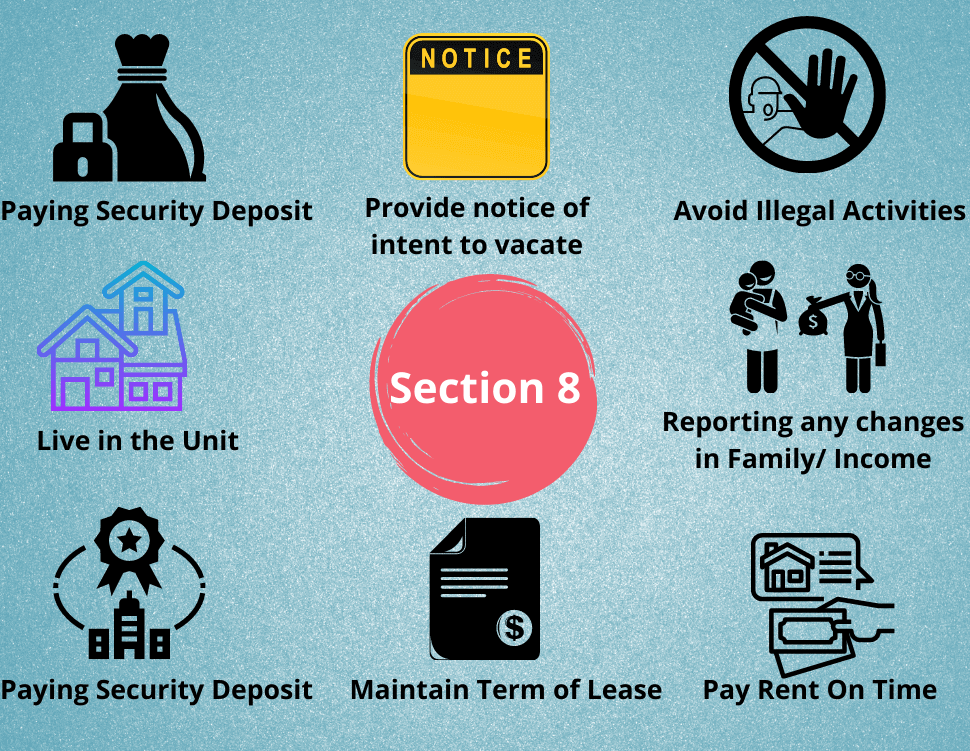
Paying the Security Deposit:
Sometimes, the tenant has to pay the security deposit to the landlord during the time of the lease agreement signing in. The tenant should try to find out if the security deposit is to be paid to the landlord or not before choosing and committing to a specific rental unit.
The section 8 program aided by the local housing authority doesn’t include the security deposit. The Local Housing Authority is only responsible for paying a certain amount of the rent not the security deposit to the landlord. The tenant is responsible for paying for the security deposit to the landlord.
Live in the unit
The section 8 voucher is given to those individuals who have a low-income level. The individuals with a section 8 voucher must reside in the rental unit. They cannot lease out to someone and live somewhere else. Leasing to someone else includes the family member as well.
Maintaining Housing Quality Standards
All section 8 tenants are required to give permission to the Local Public Housing Authority (PHA) staff to perform the inception within a certain period of time. If a family rejects or fails to provide access to PHA staff then it may result in the termination of the section 8 voucher.
Tenants are responsible for maintaining Housing Quality Standards. In case of any damages or violations that cause a unit to fail inception then the Local Public Housing Authority (PHA) ) will hold the tenants responsible for the damages. Tenants are responsible for maintaining the following things:
- Sanitary Facilities
- Food Preparation and Refuse Disposal
- Space and Security
- Thermal Environment
- Illumination and Electricity
- Structure and Materials
- Interior Air Quality
- Water Supply
- Lead-Based Paint
- Access
- Site and Neighborhood
- Sanitary Conditions
- Smoke Detectors
Complying with all the terms of your lease
Section 8 tenants must follow the terms of the lease agreements just like any other tenant. If the section 8 tenants are found violating the lease agreements, then it may result in evictions. Section 8 tenants who are evicted do not receive any special or additional protection against eviction for the cause.
Section 8 tenants must strictly follow the terms of the lease they signed with the landlord. The same applies in the condition of the section 8 landlord as well. The terms of the lease may include keeping the rental unit clean, not damaging the utilities in the property, and not disrupting the tenants.
Paying the rent on time
As part of the contract, the section 8 tenant is expected to pay a certain amount of the rent on time. The section 8 program administered and managed by the local housing authority pays a certain amount of the rent. Section 8 often pays 70% of the monthly rent of the tenant. The section 8 tenant is responsible for paying a percentage of monthly income. Usually, section 8 tenants have to pay 30% to 40% of the monthly income.
If the tenant fails on paying a certain portion of the rent that the tenant was willing to pay on time, then the tenant will not only have a dispute with the landlord but the tenant can also be asked to leave the section 8 housing choice program, which means that the tenant will no longer be receiving any of the section 8 assistance.
Reporting any changes in family composition and income
Section 8 tenant receives the rental assistance on the basis of the family structure and income level. The rental assistance received by the tenants depends on the annual income of the family members and the number of family members in the house. Any changes in the family structure and income level should be reported to the local housing authority as soon as possible i.e within 30 days after the change.
If there is a change in the family structure and income level i.e either increment or decrement, then the tenant must notify the local housing authority. So, that the local housing authority can recalculate the rental assistance being received by the section 8 tenants. If the income level of the tenant has raised, then section 8 might increase the portion the tenant has to pay toward rent each month and vice versa.
If there is an addition of a new family member but there was no increase in the income level, then section 8 might increase the amount of the rental assistance being received by the tenant.
In case, if the tenant is found not informing the local housing authority about the change in the family structure and income level then the tenant might lose their voucher entirely and even face legal actions for failing to notify of such changes.
Avoid illegal activities
If found performing any of the illegal activities on the premises, Local Housing Authorities has no tolerance for the section 8 tenants receiving the rental assistance. Illegal activities related to drugs such as drug manufacturing and production should not be carried out within the premises.
Before being approved, someone who lives in your home must pass a background check. If any of the family members residing on the premises has been found guilty of illegal activities on the premises, then the tenant’s section 8 voucher will likely be canceled and be removed from the premises.
Giving proper notice of intent to vacate.
Tenants must notify the local housing authority as well as the landlord before vacating the premises. It is the responsibility of the tenants to notify the Local Housing Authority and Landlord before certain days of moving i.e usually 30 days to 90 days which differs from state to state.
Tenants must notify the landlord and Local Housing Authority before certain days of leaving the premises. So that the landlord can start looking for the potential new tenant and the Local Housing Authority can decide when to stop sending housing vouchers to the landlord.