You notice a musty smell every time you walk into the bathroom. A few days later, dark spots appear on the ceiling, and now you’re asking yourself the same questions many Oklahoma City renters do: Is this mold? Is it dangerous? Who’s responsible for fixing it?
If you’ve discovered mold in rental property, don’t ignore it. In Oklahoma City, heavy spring storms, humid summers, plumbing leaks, and poor ventilation create the conditions mold needs to grow. What starts as a small stain may spread behind drywall, damage your rental home, and affect indoor air quality if the moisture source isn’t addressed.
At Nicehome4u, we’ve seen minor maintenance issues become costly repairs simply because they weren’t reported early. Whether you’ve found black mold in an apartment, noticed water stains after a storm, or suspect hidden moisture behind a wall, knowing what to do next helps protect both your health and your rental home.
This guide explains how to recognize the warning signs, what steps to take immediately, whether a landlord is responsible for mold, and how to help prevent the problem from returning.
Key Takeaways
- Mold in rental property is usually caused by excess moisture, plumbing leaks, roof damage, poor ventilation, or high indoor humidity.
- Early reporting helps prevent more expensive repairs and reduces the risk of mold spreading.
- Black mold in an apartment isn’t the only type of mold that can appear indoors. Mold may also be green, white, gray, or brown.
- Whether a landlord is responsible for mold depends on what caused the moisture problem.
- Preventing excess moisture is the best way to reduce future mold growth.
How to Identify and Handle Mold in Your Rental Property
Mold rarely appears without a reason. In most Oklahoma City rentals, it’s a sign that moisture has been trapped long enough for mold to grow. Plumbing leaks, roof damage after severe weather, condensation around windows, poor ventilation, and high indoor humidity are some of the most common causes.
Bathrooms, kitchens, laundry rooms, basements, and areas affected by previous water damage are the first places you should check. While many tenants immediately think they’ve found black mold in a rental home, the color alone doesn’t determine how serious the problem is. Mold can also appear green, white, gray, or brown, and any visible growth should be investigated rather than simply cleaned.
Common Warning Signs
You may have mold if you notice:
- A persistent musty or earthy smell.
- Black, green, white, or gray patches on walls, ceilings, or around windows.
- Peeling paint, bubbling wallpaper, or water stains.
- Condensation that doesn’t go away.
- Soft drywall or warped flooring.
- Allergy symptoms that improve after leaving your home.
These warning signs are common in mold in apartment buildings, especially after heavy rainfall or plumbing leaks. The sooner they’re reported, the easier it is to identify the moisture source before more extensive repairs are needed.
Quick Answer: If you notice musty odors, visible mold, water stains, or peeling paint, report the issue as soon as possible. Mold is usually a symptom of an underlying moisture problem, not the root cause itself.
What to Do Immediately
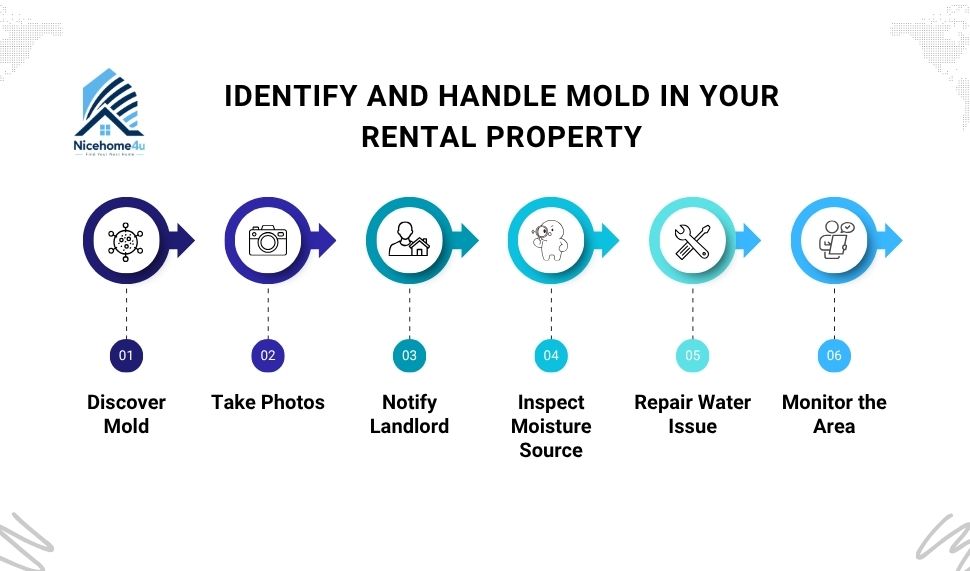
If you discover mold in your rental, focus on protecting yourself and documenting the issue instead of trying to remove it immediately.
- Take photos and videos. Record the affected area from multiple angles so you have a clear timeline if the mold spreads.
- As soon as you notice mold, send your landlord or property manager a written maintenance request. Include photos, explain where the mold is located, and note when you first noticed it.
- Avoid disturbing large areas of mold. Scrubbing, sanding, or painting over mold can release spores into the air without fixing the underlying moisture problem.
- Reduce excess moisture while waiting for repairs. Run exhaust fans, wipe away condensation, open windows when weather permits, and report active plumbing leaks immediately.
Real-World Example: After several days of heavy rain in Oklahoma City, a Nicehome4u resident noticed water stains forming on a bedroom ceiling. Instead of covering the stain with paint, they submitted a maintenance request with photos. The inspection found a small roof leak before it caused widespread mold growth, preventing costly mold repairs.
Is Landlord Responsible for Mold?
One of the first questions tenants ask is, “Is landlord responsible for mold?” In most cases, the answer depends on what caused the mold, not simply whether mold is present.
In Oklahoma City, mold often develops after plumbing leaks, roof damage from severe storms, or ongoing moisture problems. If the mold is linked to a maintenance issue outside the tenant’s control, the landlord or property manager is generally expected to investigate the cause and arrange repairs.
Landlords are typically responsible when:
- A plumbing or roof leak causes mold.
- Water intrusion or hidden plumbing leaks weren’t repaired before moisture spread into drywall or flooring.
- Poor ventilation or a building defect leads to ongoing moisture problems.
- A maintenance issue allows mold to spread.
Tenants may be responsible when:
- An active leak wasn’t reported promptly.
- Excess moisture built up because the home wasn’t properly ventilated during normal activities.
- Damage resulted from neglect or a lease violation.
Before assuming who’s responsible, review your Tenant Rights and Responsibilities in Oklahoma. It explains how maintenance responsibilities are shared between landlords and tenants and what steps you should take when a repair issue arises.
Quick Tip: No matter what caused the mold, report it as soon as you notice it. Early reporting gives your landlord or property manager the best opportunity to resolve the problem before it becomes more serious.
When Should You Call a Professional?
Not every mold problem requires professional remediation, but some situations should never be ignored.
Request a professional inspection if you notice:
- Mold returning after it has been cleaned.
- Mold spreading to new areas.
- A strong musty smell without visible mold.
- Mold after flooding or significant water damage.
- Ongoing allergy or respiratory symptoms that seem worse indoors.
A professional inspection can determine whether mold spores are limited to the surface or whether hidden moisture has allowed mold to spread behind drywall, insulation, or flooring. Identifying the moisture source is essential because cleaning visible mold alone won’t stop it from returning.
The Centers for Disease Control and Prevention (CDC) Mold Guidance also recommends fixing the underlying moisture problem because cleaning visible mold alone won’t prevent future growth.
What If Your Landlord Doesn’t Fix the Problem?
If you’ve reported mold and haven’t received a response, continue documenting the issue. Save copies of maintenance requests, emails, text messages, inspection reports, and photos showing how the mold has changed over time.
If you’re asking, “Can I sue for mold in my apartment?”, there’s no single answer. It depends on what caused the mold, whether the issue was reported promptly, and whether your landlord had a reasonable opportunity to address it. If you believe the condition has made your rental unsafe, consider speaking with a qualified attorney who understands Oklahoma landlord-tenant law.
You can also review housing resources provided by the U.S. Department of Housing and Urban Development (HUD) for additional information about rental housing and tenant rights.
How to Prevent Mold in Your Rental Home
After fixing the moisture source, a few simple habits can reduce the risk of mold returning. In Oklahoma City, humid summers, seasonal storms, and poor ventilation can create the damp conditions that allow mold spores to grow inside rental homes.
To help prevent future mold problems:
- Run bathroom and kitchen exhaust fans during and after showering or cooking.
- Open windows when weather permits to improve airflow.
- Wipe away condensation from windows and other damp surfaces.
- Report plumbing leaks, roof leaks, or water stains as soon as you notice them.
- Keep furniture a few inches away from exterior walls to improve air circulation.
- Avoid blocking HVAC vents, especially in rooms that feel damp.
- Use a dehumidifier if indoor humidity remains high.
These simple habits reduce excess moisture and help prevent mold from spreading behind drywall, flooring, insulation, and other building materials.
Quick Tip: Mold is usually a sign of a moisture problem—not the problem itself. Fixing the source of the moisture is the most effective way to stop it from returning.
Conclusion
Finding mold in rental property is stressful, but acting quickly can prevent moisture damage from becoming costly repair. Document the problem, notify your landlord or property manager in writing, and focus on fixing the source of the moisture instead of only cleaning the visible mold.
For renters in Oklahoma City, early reporting, proper documentation, and prompt repairs are the best ways to protect your health, your home, and your belongings. If you need help with a maintenance request or are looking for a professionally managed rental home, contact Nicehome4u to speak with our team. We’re committed to providing quality rental homes and responsive property management throughout the Oklahoma City area.