Something breaks in your rental home. The air conditioner stops working. The toilet won’t flush. A window cracks. There’s a strange leak under the kitchen sink. Your first question is probably:
“Am I responsible for fixing this, or is my landlord?”
The answer isn’t always obvious. As a tenant, you’re generally responsible for taking reasonable care of the property and paying for damage you or your guests cause. But that doesn’t mean you’re responsible for every repair that happens while you’re renting. Normal wear and tear, aging systems, and many major repairs are generally the landlord’s responsibility.
In Oklahoma, landlords have specific duties under the Oklahoma Residential Landlord and Tenant Act, including maintaining certain systems and keeping rental properties fit and habitable. At the same time, your lease may assign you certain routine maintenance responsibilities.
So before you grab a toolbox or assume you’re getting a repair bill, here’s what every Oklahoma renter should know.
Disclaimer: This article provides general information about Oklahoma rental properties and isn’t legal advice. Your lease and the specific circumstances of a repair always matter. For significant disputes, consult a licensed Oklahoma attorney.
Quick Answer: What Repairs Are Tenants Usually Responsible For?
As a tenant in Oklahoma, you’re generally responsible for:
- Damage you intentionally or negligently cause
- Damage caused by household members or guests, depending on your lease
- Damage caused by your pets
- Routine maintenance tasks specifically assigned to you in your lease
- Keeping the rental reasonably clean and sanitary
- Taking reasonable steps to prevent avoidable damage
- Reporting maintenance problems promptly
You’re generally not responsible simply because something breaks. If an old water heater stops working, that doesn’t automatically make you responsible for replacing it. If you accidentally put a hole through a door, that’s a different story.
The key question is always: What caused the problem?
Damage vs. Normal Wear and Tear: The Most Important Distinction
If you remember only one thing from this article, remember this: normal wear and tear isn’t the same as damage.
Your rental won’t look exactly the same after you’ve lived there for two or three years as it did on move-in day, and that’s normal. Paint fades. Carpets wear. Floors show ordinary signs of use. Fixtures age. You shouldn’t automatically be responsible for paying to make a rental look brand new again.
Examples of Normal Wear and Tear
- Minor scuff marks
- Faded paint
- Normal carpet wear
- Minor wear on flooring
- Aging fixtures
- Ordinary deterioration from everyday use
Examples of Potential Tenant-Caused Damage
- Large holes punched in walls
- Broken doors
- Broken windows caused by the tenant or a guest
- Large carpet burns
- Deep gouges in flooring
- Broken fixtures caused by misuse
- Significant pet damage
- Damage caused by negligent behavior
A simple way to think about it:
You lived in the home → things naturally aged → that’s generally wear and tear. You (or someone you’re responsible for) damaged something → that may be tenant-caused damage.
Repairs That Are Usually a Tenant’s Responsibility
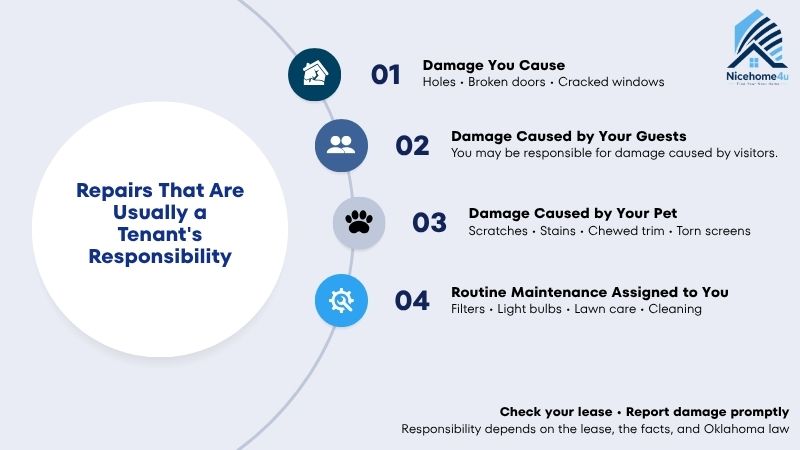
1. Damage You Cause
If you damage something in your rental, you may be responsible for the repair. For example, imagine you’re moving a heavy piece of furniture and accidentally punch a hole in the drywall; that’s different from a small scuff that develops from normal occupancy.
Other examples include breaking a door, cracking a window, damaging cabinets or countertops, breaking a fixture through misuse, or damaging an appliance through improper use.
If you’ve caused the damage, don’t try to hide it; report it. Your landlord or property manager can determine what needs to be repaired and how the cost should be handled under your lease and applicable law.
2. Damage Caused by Your Guests
What happens if a friend breaks something while visiting? You didn’t personally cause the damage, but your guest did. Many leases make tenants responsible for damage caused by guests, so “I didn’t break it” doesn’t automatically end the conversation.
The best move is to report the damage promptly and explain what happened. Waiting until move-out to disclose guest-caused damage tends to make disputes bigger, not smaller.
3. Damage Caused by Your Pet
Depending on your lease and the circumstances, you may be responsible for pet-related damage such as:
- Scratched doors
- Chewed trim
- Damaged flooring
- Torn screens
- Excessive carpet stains
- Damaged landscaping
- Significant pet odors or staining
This doesn’t mean every mark associated with having a pet is automatically chargeable; the key distinction is whether the condition reflects ordinary use or actual damage, and what your lease says.
4. Routine Maintenance Assigned to You
Not every tenant’s responsibility is technically a “repair.” Oklahoma law allows landlords and tenants to agree, in a conspicuous written agreement, that the tenant will perform specified repairs or maintenance tasks. Common examples include:
- Replacing HVAC filters
- Replacing ordinary light bulbs
- Basic lawn care
- Keeping certain areas clean
- Other specifically assigned maintenance tasks
Always check your lease before assuming who handles what.
Frequently Asked Tenant Maintenance Questions
Are tenants responsible for changing HVAC filters?
Possibly; check your lease. Many rental agreements require tenants to replace HVAC filters regularly, since this is considered routine maintenance rather than a system repair. Replacing an air filter may be your job; replacing a failed compressor is a very different matter. A neglected filter can affect the HVAC system and create an argument over whether resulting damage was avoidable.
Are tenants responsible for lawn care?
It depends on the lease. Single-family rentals often require tenants to mow, remove leaves, water the grass, or handle other routine yard work, but lawn care isn’t automatically the tenant’s job in every Oklahoma rental. Some arrangements include it; others don’t.
Are tenants responsible for replacing light bulbs?
Usually, yes. Replacing an ordinary burned-out bulb is considered basic upkeep. But there’s a real difference between a dead bulb and a broken electrical fixture. If a new bulb doesn’t fix the problem, report it rather than opening up the wiring yourself; electrical work should be handled by a qualified professional.
Repairs That Are Usually the Landlord’s Responsibility
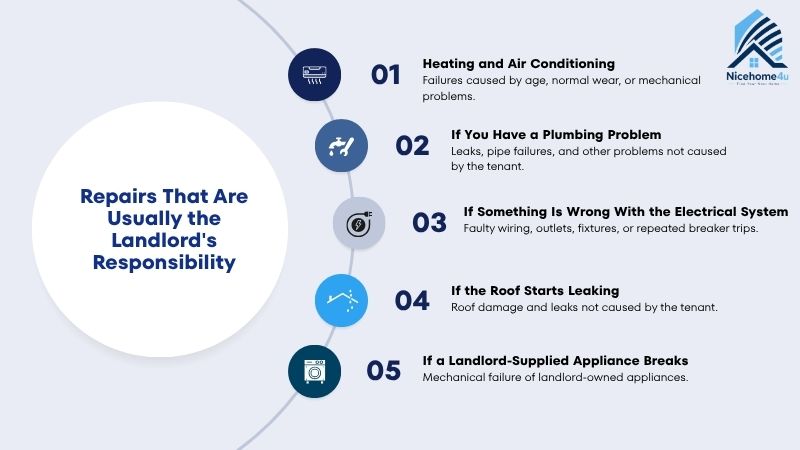
This is where many tenants get confused: renting a home doesn’t mean you’re responsible for maintaining every system inside it.
Oklahoma law generally requires landlords to make repairs necessary to keep rental dwellings fit and habitable, and to maintain certain supplied systems, facilities, and appliances in good and safe working order, including:
- Plumbing
- Electrical systems
- Heating
- Air conditioning
- Sanitary systems
- Other landlord-supplied facilities and appliances
But again, the cause matters.
If Your Air Conditioner Stops Working
Don’t automatically assume you’re on the hook. If a landlord-supplied HVAC system fails because of age, normal deterioration, or a mechanical issue you didn’t cause, the repair generally falls to the landlord. Your responsibility may differ if you damaged the system or failed to perform a maintenance task specifically assigned to you.
What to do: Don’t attempt the repair yourself. Check your lease for the repair-request process, notify your landlord or property manager, explain what happened, take photos, and keep a record of the request.
If You Have a Plumbing Problem
A pipe that suddenly develops a leak is generally something to report to the landlord. Flushing something inappropriate and causing a blockage may fall on you. Either way, report leaks quickly, a small plumbing problem can turn into major water damage if ignored.
If Something Is Wrong With the Electrical System
Report issues like outlets that don’t work, repeated breaker trips, sparks, faulty wiring, or malfunctioning fixtures rather than repairing them yourself. If something seems unsafe, stop using it if you can safely do so and contact your landlord or property manager right away.
If the Roof Starts Leaking
A leaking roof is generally not a routine tenant repair. Report the problem promptly and take reasonable steps to protect your belongings if it’s safe to do so, for example, moving furniture or placing a container under the leak. Don’t climb onto the roof yourself.
If a Landlord-Supplied Appliance Breaks
Whether you’re responsible depends on who owns the appliance, what the lease says, what caused the failure, and whether the appliance simply reached the end of its useful life. A refrigerator that stops cooling due to internal mechanical failure is very different from one damaged through tenant misuse. Check your lease and report the problem rather than assuming you need to replace it yourself.
What If You Accidentally Damage Something?
Accidents happen: a cracked bathroom fixture, a damaged door while moving furniture, a broken window. The instinct to quietly fix it yourself and hope nobody notices usually backfires. An unauthorized repair can make things worse, especially involving plumbing, electrical, HVAC, or structural components.
Tell your landlord or property manager what happened. It’s far better to have the issue documented and handled properly than to risk a bigger problem, or a bigger bill, later.
Why Reporting Repairs Promptly Matters
Small problems can become expensive problems fast:
- Day 1: You notice a small leak under the sink.
- Week 2: The cabinet starts swelling.
- Month 1: Water has damaged the cabinet, flooring, or surrounding materials.
The original problem may not have been your fault, but failing to report it promptly can create additional complications. If something leaks, breaks, stops working, looks damaged, becomes unsafe, or starts behaving unusually: report it.
Can Your Landlord Make You Pay for Repairs?
Potentially, but not simply because something broke. If you caused damage through negligence, misuse, or intentional behavior, you may be responsible for the resulting costs depending on your lease and applicable law. But a landlord shouldn’t automatically treat every repair as tenant-caused damage.
Scenario 1 — Old Water Heater: You’ve lived in the house for two years and the water heater suddenly fails. You didn’t damage it. This is generally the landlord’s responsibility.
Scenario 2 — Broken Water Heater: You intentionally damaged the water heater, or caused damage through improper use. This is a very different situation.
The cause always matters, and it’s the same logic that Oklahoma law applies when landlords consider deducting repair costs from a security deposit. Ordinary deterioration through normal use isn’t automatically the same thing as damage you caused.
Protect Yourself From Move-Out Disputes
When you move in, take photos or video of the property’s condition, including walls, floors, carpets, doors, windows, appliances, fixtures, bathrooms, kitchen, and any existing damage. Keep those files somewhere you can access later. If there’s already a scratch on the floor at move-in, you don’t want to discover at move-out that nobody remembers it was there.
Tenant Repair Checklist: What to Do When Something Breaks
- Don’t panic. Something being broken doesn’t automatically mean a repair bill is coming.
- Check your lease for sections on maintenance, repairs, appliances, HVAC, lawn care, pets, damage, and emergency repairs.
- Document the problem with photos or video.
- Report it using the repair-request method your landlord or property manager specifies.
- Explain what happened, specifically. Instead of “the bathroom is broken,” say: “I noticed water leaking underneath the bathroom sink this morning. I haven’t moved or altered the plumbing, and water is collecting inside the cabinet.”
- Don’t attempt major repairs. Leave plumbing, electrical, HVAC, and structural work to qualified professionals unless you’ve been specifically authorized.
- Keep your records: emails, texts, maintenance requests, photos, videos, and repair confirmations.
What Does Oklahoma Law Say About Tenant Repairs?
The Oklahoma Residential Landlord and Tenant Act establishes several landlord responsibilities, including maintaining rental dwellings in a fit and habitable condition and maintaining certain supplied systems and facilities. At the same time, the law allows landlords and tenants to agree, in a conspicuous written agreement, that the tenant will perform specified repairs or maintenance tasks.
That means your lease matters. Before assuming you have to pay for a repair, or assuming your landlord has to handle it, read the relevant section of your rental agreement. For significant disputes involving habitability, repair costs, lease violations, or your rights as a tenant, consider speaking with an Oklahoma attorney.
The Bottom Line for Oklahoma Renters
When something breaks in your rental, don’t immediately assume “I have to pay for this”, and don’t assume “my landlord has to fix everything.” Instead, ask:
- What broke?
- What caused it?
- Is it normal wear and tear or damage?
- Does my lease assign this responsibility to me?
- What does Oklahoma law say?
As a tenant, your biggest responsibilities are generally to take reasonable care of the property, avoid causing damage, handle maintenance tasks assigned to you by the lease, and report problems promptly. Understanding these responsibilities before you sign a lease can save a lot of confusion later.